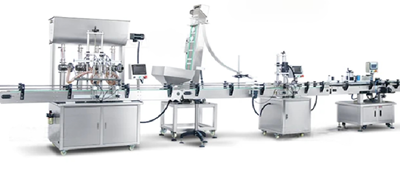
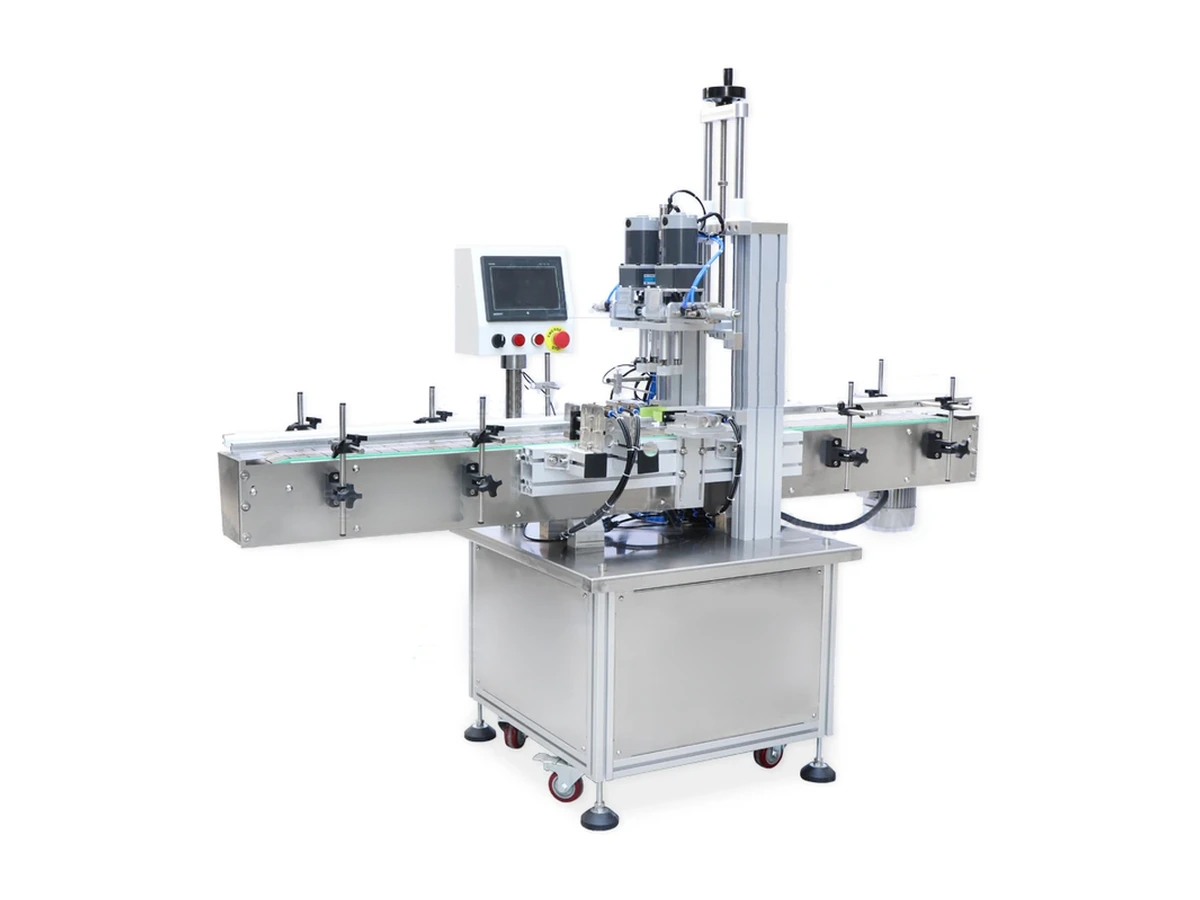
Automatic twist-off jar capper
Automatic metal lid feeding and capping route with a published Ø30–80 mm lid range.
Explore this option
Metal twist-off closures need more than nominal lid diameter. Lug engagement, liner compression, fill temperature, headspace and finished vacuum can all influence the closing process.
Start with real samples. Your jar, lid and target output provide a more reliable recommendation than choosing by model number alone.
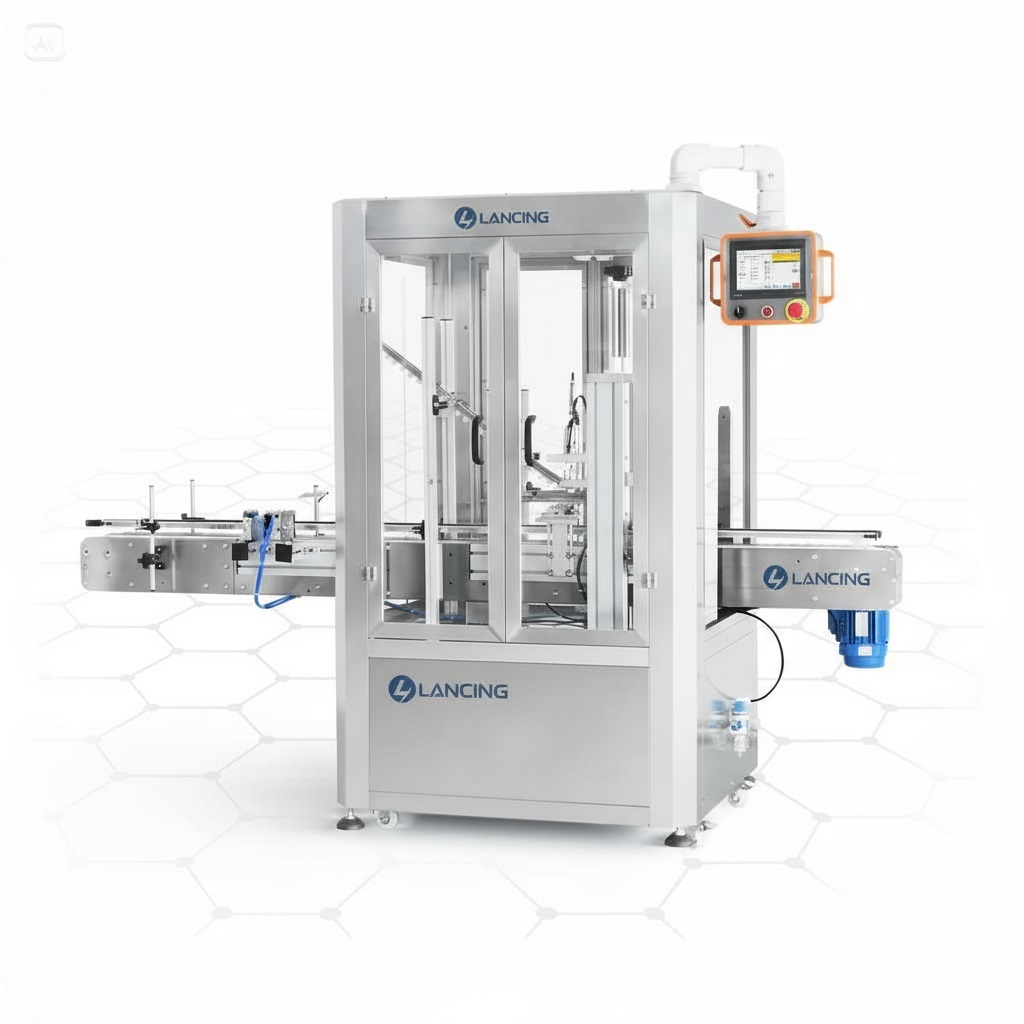
A dedicated twist-off machine can feed and apply compatible metal lids, while the surrounding process determines whether the finished jar achieves the required seal and vacuum.
Automatic metal lid feeding and capping route with a published Ø30–80 mm lid range.
Explore this option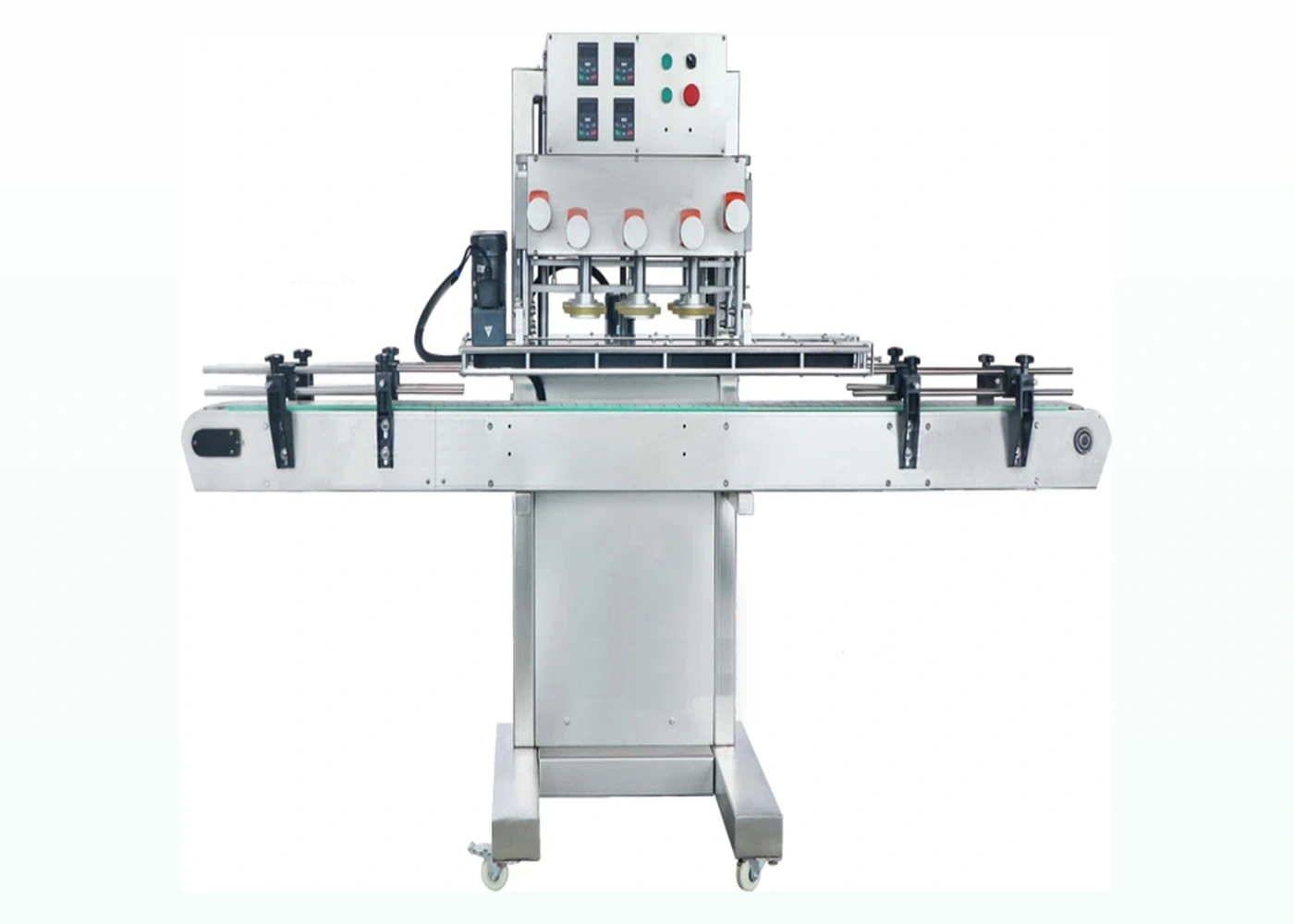
Review mechanical vacuum, steam-flow and process-vacuum considerations for compatible food jars.
Explore this option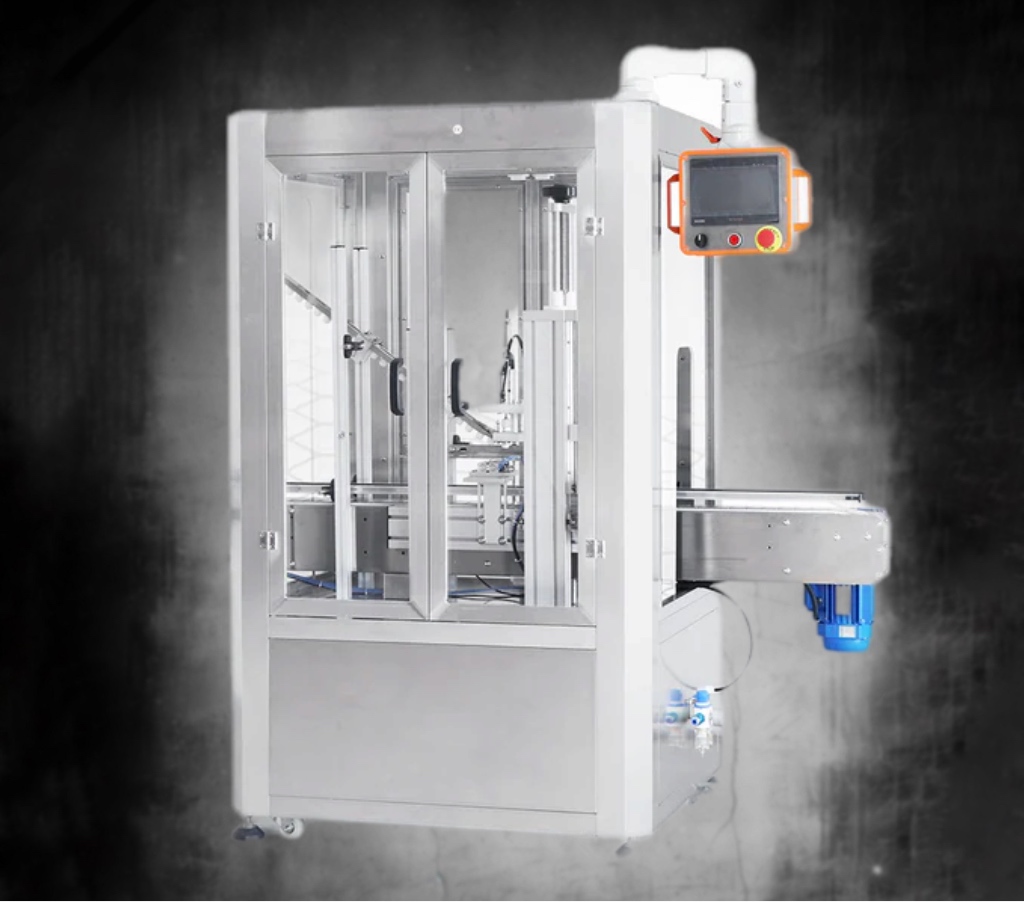
Plan capping around hot fill, sauce residue, cooling, cap button and finished vacuum checks.
Explore this optionA closure that appears tight can still fail a leak, vacuum or shelf-life requirement. Define the full process and quality test before selecting the capping method.
| Process area | Why it matters | What to provide |
|---|---|---|
| Lid specification | The lug pattern and liner must match the jar finish and application method. | Production lid samples, drawing and supplier data. |
| Fill condition | Temperature and headspace influence internal pressure and vacuum formation. | Product temperature at capping, fill level and cooling profile. |
| Jar condition | Product on the finish or damaged glass can compromise sealing. | Filled samples, finish cleanliness and reject criteria. |
| Acceptance | Visual tightness alone is not an adequate seal test. | Vacuum range, cap-button state, leak test and shelf-life protocol. |
The machine supplier can demonstrate closure application under agreed conditions, but product process validation and shelf-life acceptance remain part of the packer's quality system.
Indicative dimensions and speeds are screening information, not an acceptance test.
It is typically a metal closure with lugs that engage corresponding features on a glass jar finish, rather than a continuous screw thread.
No. Vacuum may come from hot-fill cooling, steam-flow capping, mechanical evacuation or another validated process. The machine configuration must match the required method.
Do not assume compatibility. Continuous-thread plastic lids and metal lug lids normally require different heads and application behaviour.
A metal lug lid can be correctly presented and turned by the machine yet still fail the finished-pack requirement if the jar finish, liner, product residue, headspace, temperature or cooling conditions are outside the approved process.
| Control point | Record during the trial | Acceptance basis |
|---|---|---|
| Jar and lid identity | Supplier, batch, dimensions, lug pattern, liner and any finish defect. | Only approved production components are tested together. |
| Fill and capping condition | Product, fill level, headspace, temperature at capping and finish cleanliness. | Condition remains inside the process owner’s validated limits. |
| Lid engagement | Cap height, visible level, lug engagement and any cross-lug or liner damage. | Approved visual and dimensional standard with no damaged components. |
| Vacuum or button result | Instrument, units, measurement point, cooling/conditioning time and button state. | Customer-approved range and method; button position is not used as the only evidence unless the process specification says so. |
| Leak and hold checks | Method, sample size, storage orientation, elapsed time and failed-pack teardown. | Agreed release or validation protocol for the product and pack. |
Do not compare vacuum readings taken at different temperatures or times as though they were equivalent. Record the complete method with every result.
Read the twist-off vacuum and button-check guide · Build a full closure-integrity method
A metal lug lid can be correctly presented and visibly level while the finished pack still fails the required vacuum or integrity check. The capping trial should therefore capture the component, filling, closing, cooling and release conditions as one traceable process.
| Process stage | What to control or record | Evidence to retain |
|---|---|---|
| Jar and lid receipt | Approved finish, lug pattern, liner, component condition and production batch. | Component identity, dimensional data and representative samples. |
| Filling | Product condition, fill level, headspace and cleanliness of the jar finish. | Filled samples and the process readings used by the pack owner. |
| Lid feeding and placement | Orientation, cosmetic contact, liner condition and correct position before closing. | Feed observations, rejected lids and photographs of any recurring fault. |
| Twist-off application | Jar stability, downward load, rotation, lug engagement and repeatable machine settings. | Setup record, cap-height or engagement observations and retained packs. |
| Cooling or conditioning | The approved time and conditions before button, vacuum, leak or opening checks. | Elapsed time, pack temperature where relevant and matched sample identity. |
| Finished-pack release | The customer-approved integrity method and the action for a marginal result. | Measured result, visual condition, teardown findings and disposition. |
When a pack fails, compare it with a matched acceptable pack from the same jar and lid batches. Inspect lug engagement, cap position, liner contact, finish contamination and any damage before changing several machine settings. Then review fill, headspace, cooling and test timing. A controlled comparison is more informative than repeated adjustment without retained evidence.
Compare vacuum process routes · Build an integrity test plan · Review food-jar process conditions
A twist-off capping trial should establish correct lug engagement and component handling, then verify the finished pack at the process condition used for release. It should not assume that application alone proves vacuum or shelf-life performance.
Review jar and lid compatibility before tooling, use the hot-fill jar capping guide where filling and cooling affect the result, and define the evidence in the FAT/SAT acceptance plan.
A twist-off lid is a lug closure, not simply a continuous-thread screw cap. Correct lug engagement and the wider fill-and-cool process both matter to the finished jar.
A trial should check consistent lid presentation, visible seating and repeatable lug engagement on representative jars, then apply the customer’s agreed post-process checks.
A seated lid can still be incorrectly engaged if it entered at an angle or if the jar finish and closure are mismatched. Inspect samples across the run, include starts and restarts, and record any damaged lugs, cocked lids or closures that release abnormally.
The finished condition can change as the product, headspace, jar and closure cool, so the immediate appearance at the machine is not the whole acceptance test.
Vacuum development, liner contact, product on the finish, closure temperature and container variation may affect the later result. Define when samples are checked and keep the fill-and-cool conditions consistent during trials.
No. Extra force cannot correct an incompatible finish, poor lug engagement, contaminated sealing surface, damaged closure or unsuitable process condition.
Excessive force may mark the lid, damage lugs or make opening difficult. The correct setting must be established with the actual pack and judged against agreed closure and process evidence rather than a “tighter is better” assumption.
Samples should be accompanied by the intended product condition, fill temperature where relevant, headspace, time from filling to capping, cooling method and inspection timing.
These factors help distinguish a machine-handling issue from a process or pack-compatibility issue. Lancing can assess the capping operation, while the food business remains responsible for validating the complete product and preservation process.
Provide production jars and lids, the lug finish information, product and fill process, headspace, cooling method, target output and the checks used to release a finished pack.
Send your jar and lid detailsA metal lug lid can be present and visually square before the finished vacuum condition has developed. Separate checks that confirm lid application from checks that depend on headspace, temperature, cooling and the complete pack process.
| Process point | Useful checks | Important limitation |
|---|---|---|
| Before capping | Jar finish cleanliness, lid orientation, component identity and damage. | A good component check does not prove correct application. |
| Immediately after capping | Lid presence, position, cap height, cocking, obvious lug/application damage. | Button or vacuum may not yet represent the cooled finished pack. |
| After defined cooling/conditioning | Button state, vacuum measurement, cap height, leak and visual checks using the approved method. | The time, temperature and instrument must be consistent for comparison. |
| Retained sample review | Teardown, liner/contact evidence, component dimensions and failure investigation. | Destructive or laboratory checks may be sampled rather than inline. |
Design any automatic check around the actual lid finish, button profile, jar colour, condensation and line environment. Continue with the inspection and reject systems guide and the twist-off vacuum method guide.
Include packs from the correct process stage. A cold empty jar, a hot-filled jar and a cooled finished jar can give very different evidence even when the lid looks similar.
Discuss twist-off inspection needsMetal lug or twist-off lids are selected around their jar finish and the approved thermal or vacuum closing process. Finished-pack evidence may include button condition, vacuum measurement, lid position and closure integrity after the defined cooling or conditioning stage.
By contrast, a conventional induction-sealing route normally uses a compatible foil-lined continuous-thread cap that is applied first and then passes under a sealing head. Do not transfer settings, inspection methods or acceptance limits between these closure systems without pack-specific evidence.
Compare the downstream foil-sealing route or continue with twist-off button and vacuum checks.
Send your jar, lid, product and target output. Lancing will help you identify a practical machine route and the samples needed for confirmation.