
Automatic Twist-Off Jar Capping Machine
An automatic feeding and capping route for metal twist-off closures commonly used on glass jars, specified around lid presentation, downward force, closure engagement and finished seal requirements.
Start with real samples. Your jar, lid and target output provide a more reliable recommendation than choosing by model number alone.
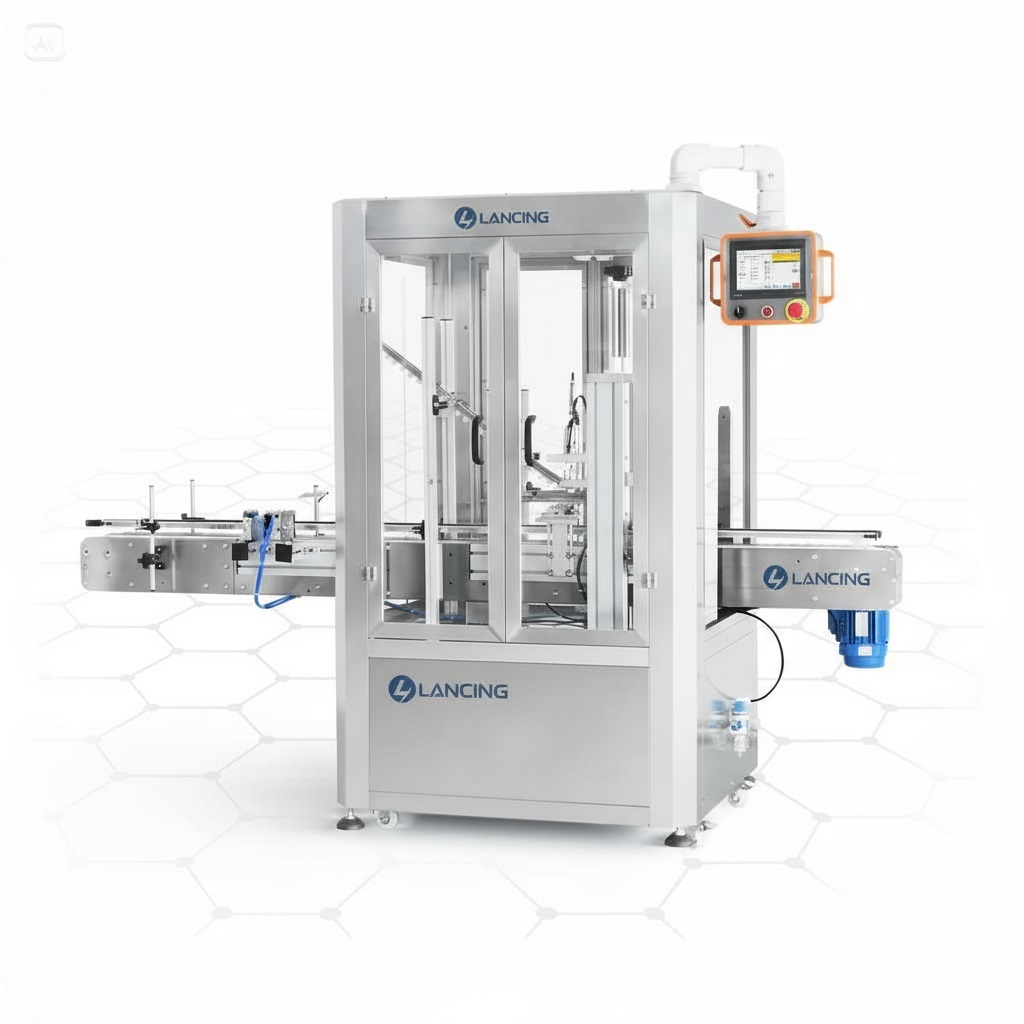
Equipment example shown; the final configuration is confirmed for your jars and lids.
Equipment examples
These photographs show capping and related packaging equipment. They do not identify a confirmed configuration for this machine; we confirm tooling and guarding for your jars and lids during project review.
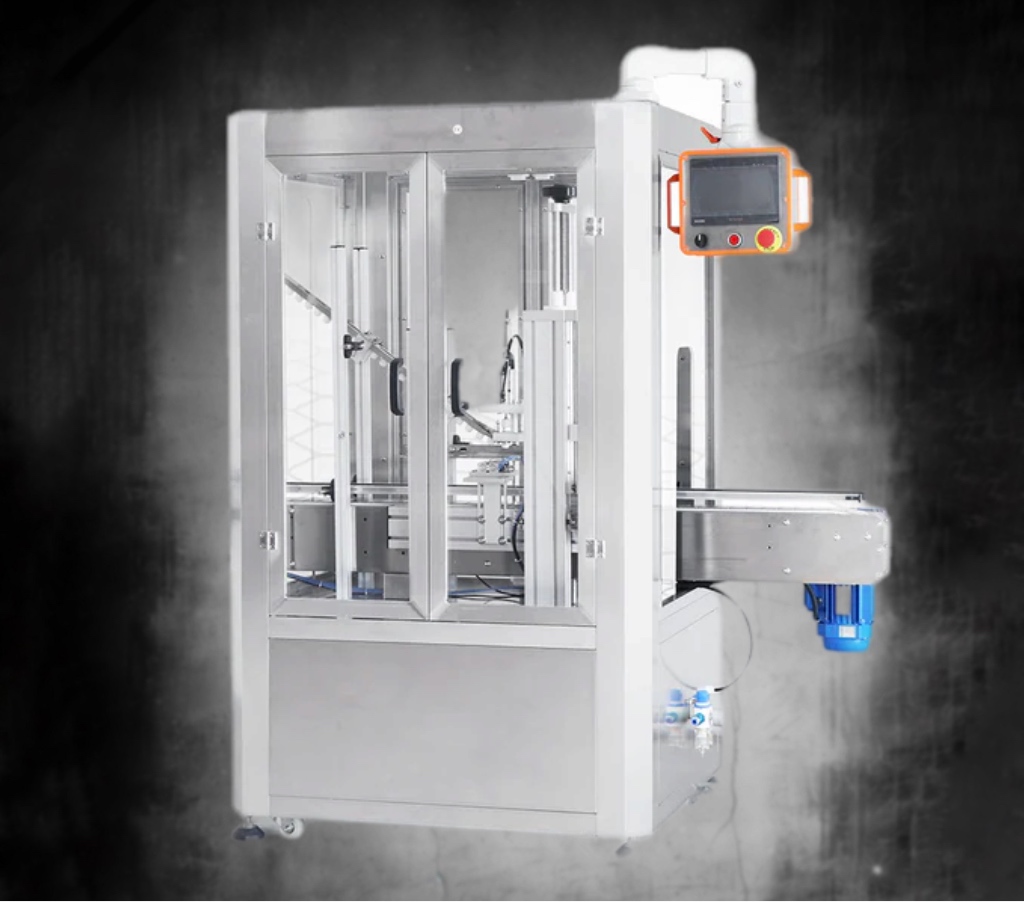
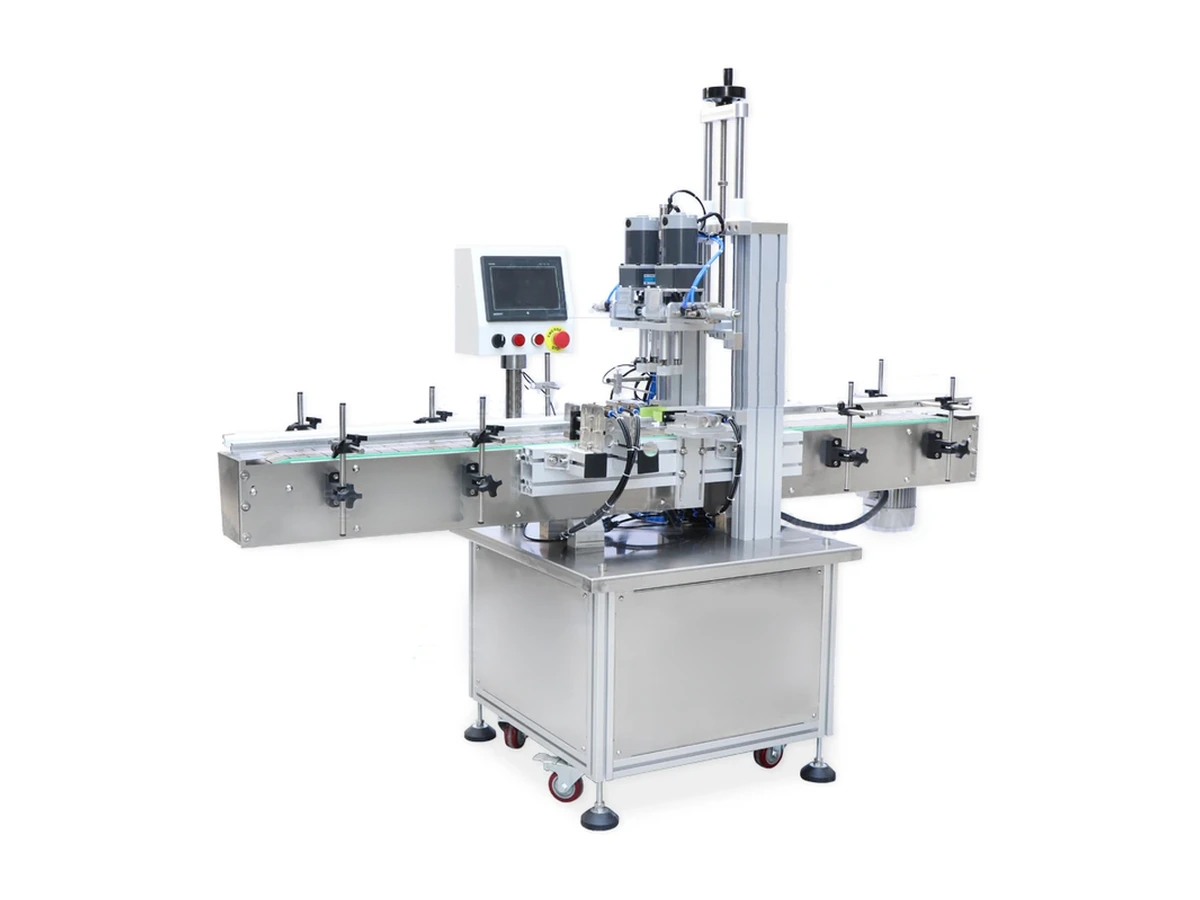
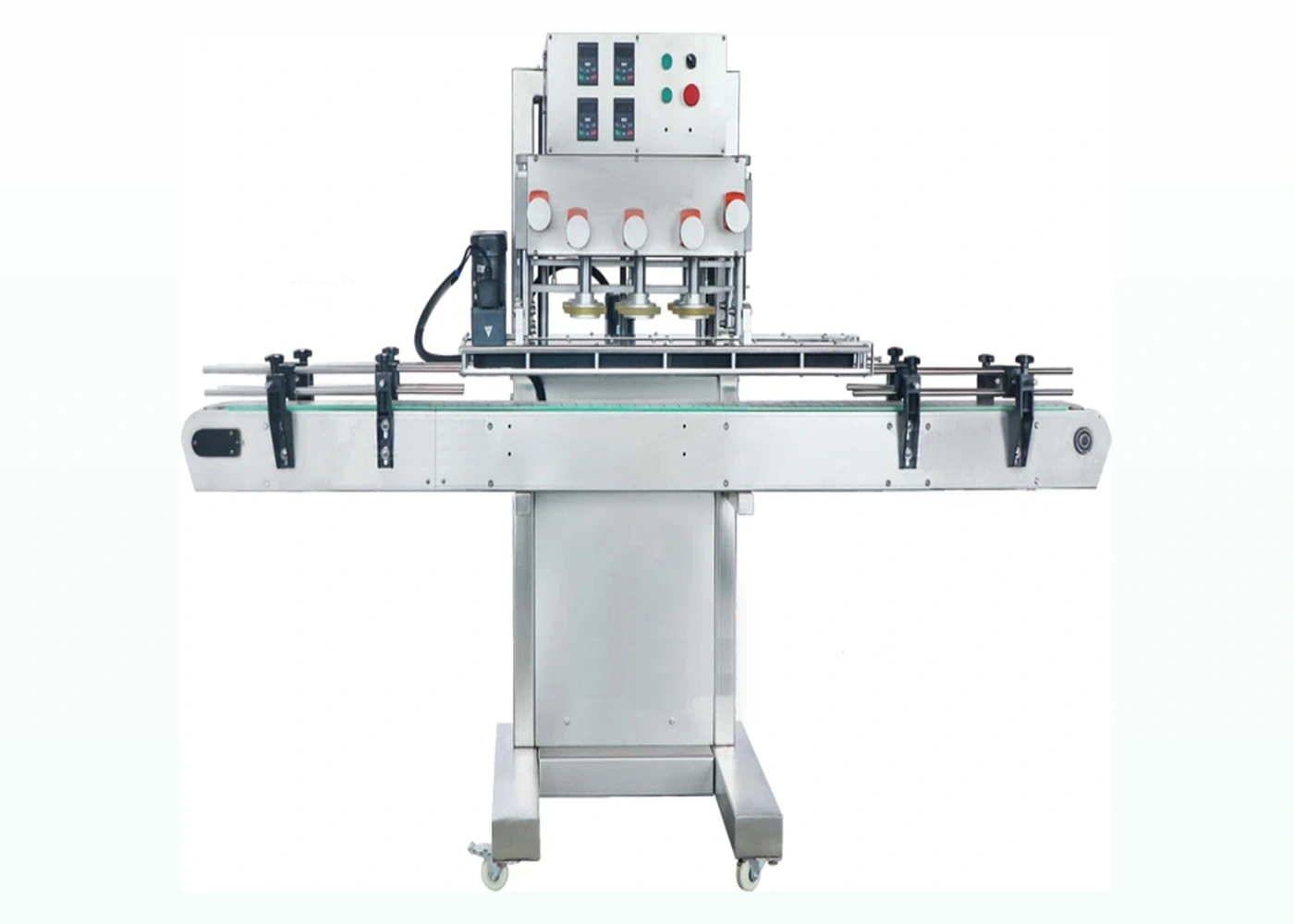
Ask for a demonstration using your own jars and lids before the machine is specified.
Use these figures to create your first shortlist.
Your confirmed specification will be based on real jars, lids, product conditions and an agreed trial.
| Indicative output | 30–40 jars per minute, format dependent |
|---|---|
| Published lid outside diameter | Ø30–80 mm |
| Published electrical supply | 110/220 V |
| Published power | 2 kW |
| Indicative air pressure | 0.7 MPa |
Planning figures only. Final capability is confirmed against your production jars, lids, product conditions and required line layout.
Best suited to a defined jar-and-lid range.
Glass jars using compatible metal twist-off lids where the project requires automatic cap presentation and a repeatable closing cycle.
- Dedicated metal twist-off closure route
- Automatic lid feeding and presentation
- Inline jar handling for repeatable production
- Can be evaluated for sauces, preserves, pickles and similar glass-jar formats
What this route is designed to improve
Controlled closure application can reduce variation from hand tightening, make the cycle easier to train and provide a clearer basis for quality checks.
It does not remove the need to validate seal performance. Torque, lid height, vacuum, leak testing and visual finish should be defined for the actual packed product.
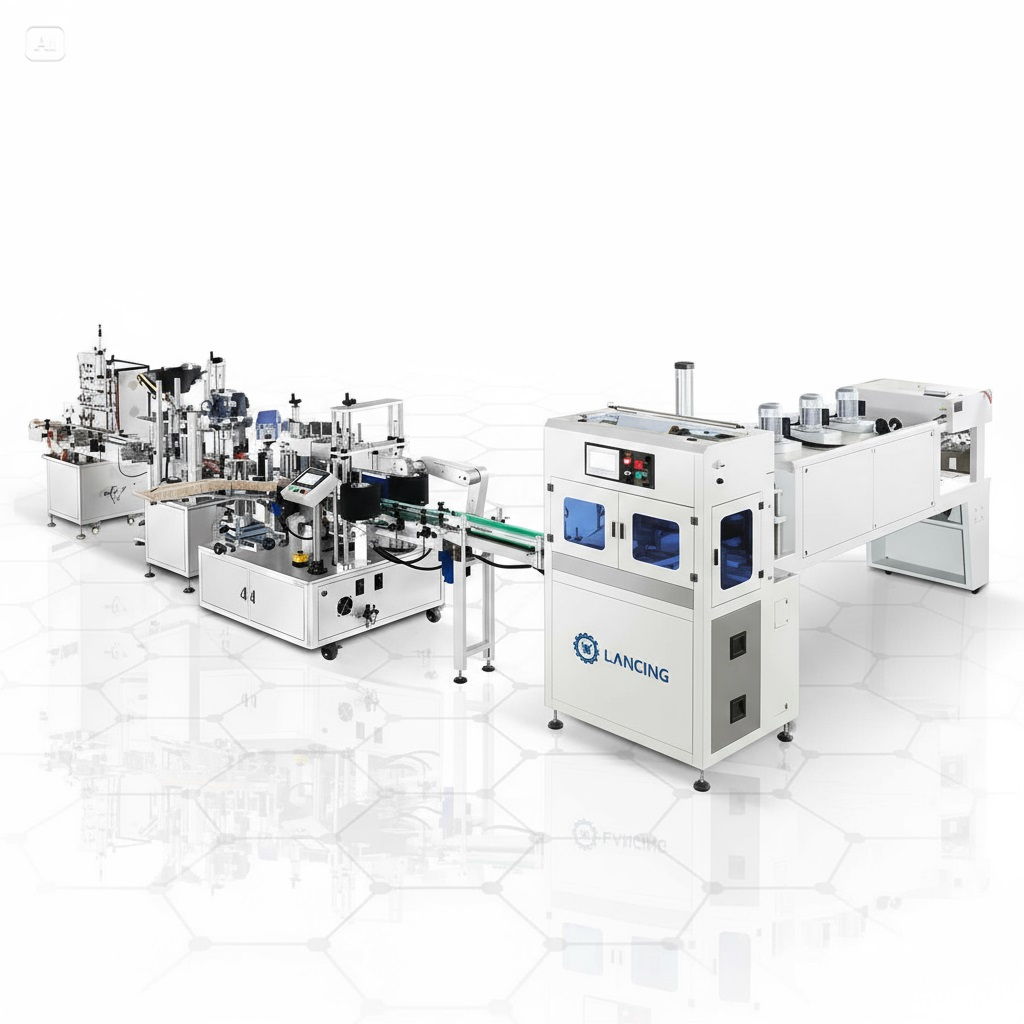
Send enough information for a realistic configuration.
Provide filled and empty jars, production lids, neck finish drawings if available, hot-fill or cold-fill conditions, vacuum expectation, lid liner details and finished-pack test criteria.
- Samples: production jars, lids and any liners or tamper features.
- Process: fill product, temperature, residue risk and finished-pack checks.
- Output: target jars per minute, batch pattern and operator availability.
- Integration: floor space, conveyor height, power, air and adjoining equipment.
Automatic Twist-Off Jar Capping Machine questions.
Is a twist-off lid the same as a normal screw lid?
No. Both rotate, but the lug pattern, liner and sealing behaviour can require a dedicated application and sealing method.
Can this machine create a vacuum seal?
Vacuum requirements depend on the process, headspace, product temperature and machine configuration. The complete closing process must be reviewed, not only the capping head.
Why are production jar samples essential?
Glass finish tolerances, lid lugs, liner compression and product conditions determine whether the lid feeds, engages and seals consistently.
Ready to check this machine against your pack? Send your jars, lids and target output, or view related Lancing machine information.
Confirm automatic lid feeding and finished twist-off seal performance together.
The published lid range and output support an initial shortlist. The trial must then prove the actual lid can be sorted, presented, engaged and closed on the production jar under the intended fill and cooling conditions.
| Trial block | Required samples or conditions | Evidence to approve |
|---|---|---|
| Lid feed | Representative bulk quantity, normal component batches and the most difficult approved lid finish. | Orientation, jam, cosmetic and refill results. |
| Jar handling | Empty and filled jars, dimensional variation and any hot or wet handling condition. | Stable transfer, no breakage or unacceptable marks, and recorded guide settings. |
| Closure application | Production lids and jars at the specified capping condition. | Cap height, lug engagement, liner condition and defect log. |
| Finished seal | Approved cooling/conditioning time and test method. | Vacuum, button, leak, visual and hold results supplied by the process owner. |
| Format change | One representative approved changeover. | Parts list, elapsed time, settings and signed first-off samples. |
No universal vacuum number is published for this machine because the acceptable result belongs to the complete jar, lid, product and process. Use the vacuum-check method guide to make results comparable.