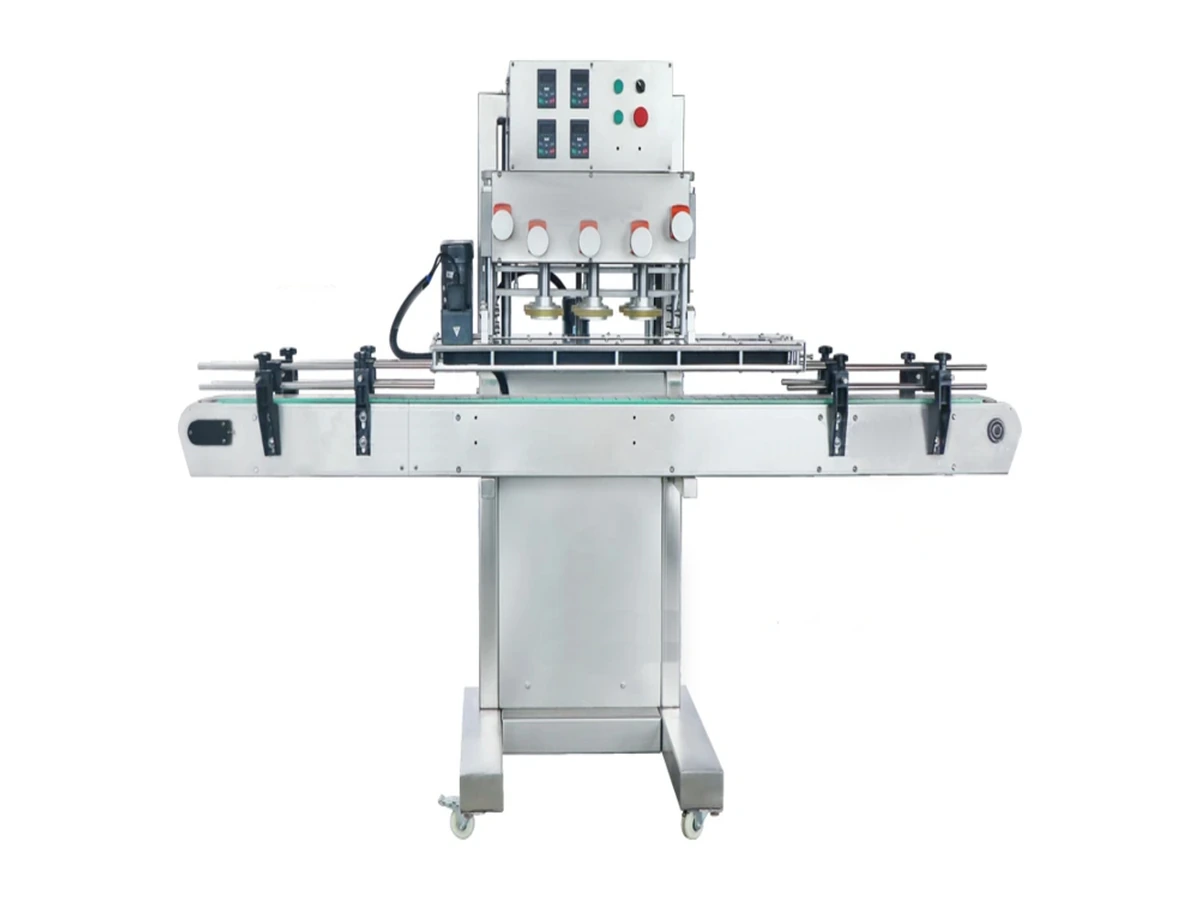
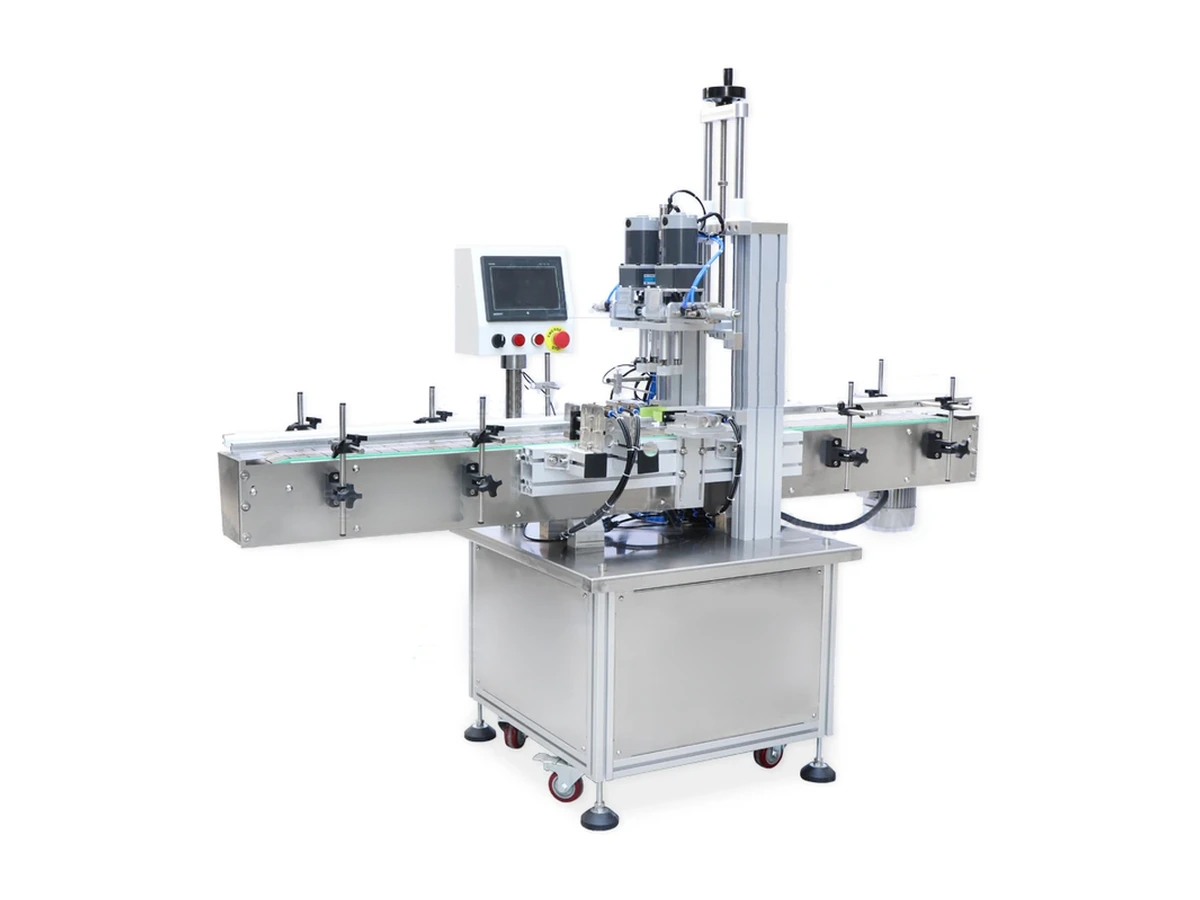
Semi-automatic screw jar capper
Desktop capping with manual lid placement and automatic jar clamping for lower-volume threaded lids.
Explore this option
Operator-assisted capping is often the practical step between hand tightening and a fully fed conveyor line, especially where batches change frequently or output is moderate.
Start with real samples. Your jar, lid and target output provide a more reliable recommendation than choosing by model number alone.
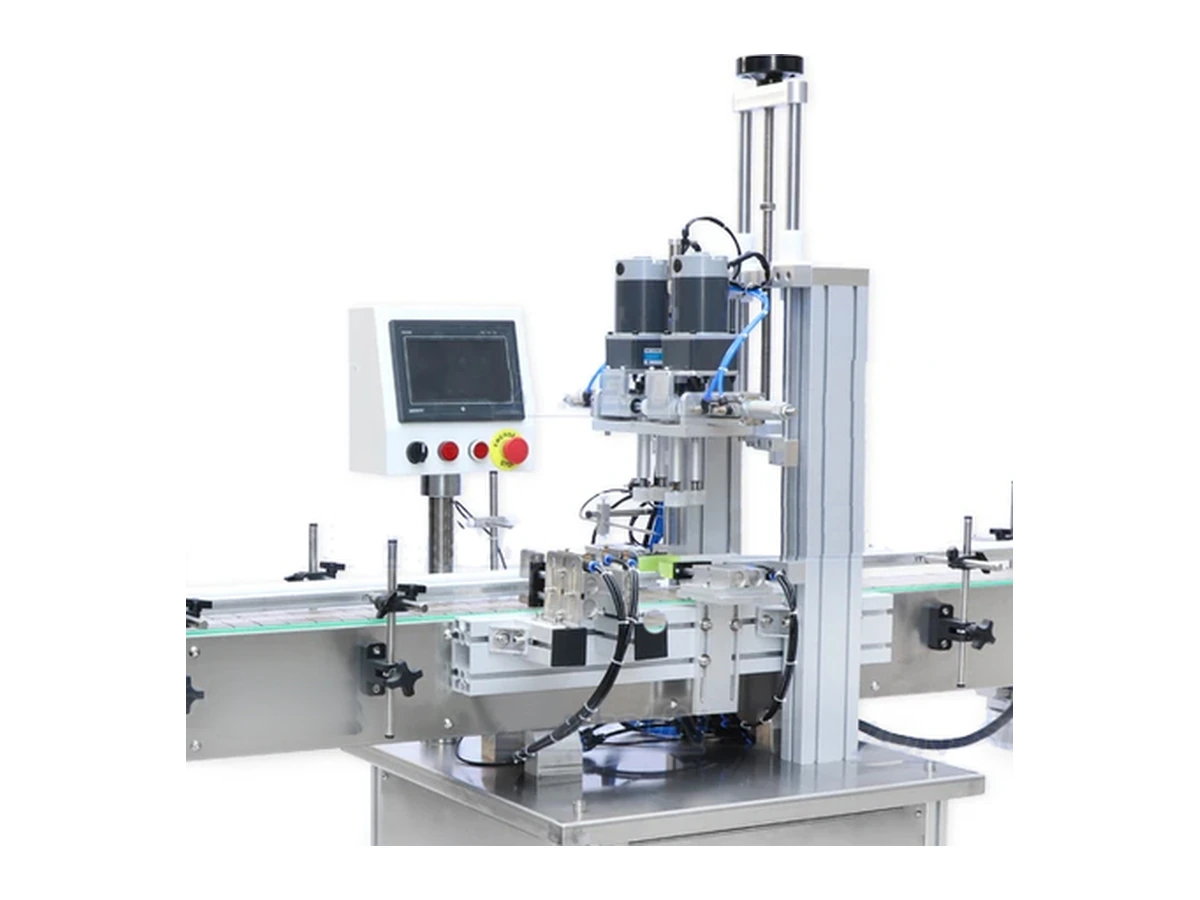
The operator can place each lid and present the jar, while the machine provides clamping, head movement and repeatable tightening settings.
Desktop capping with manual lid placement and automatic jar clamping for lower-volume threaded lids.
Explore this option
Plan torque, grip, cap surface protection and jar support before choosing a chuck or driven head.
Explore this option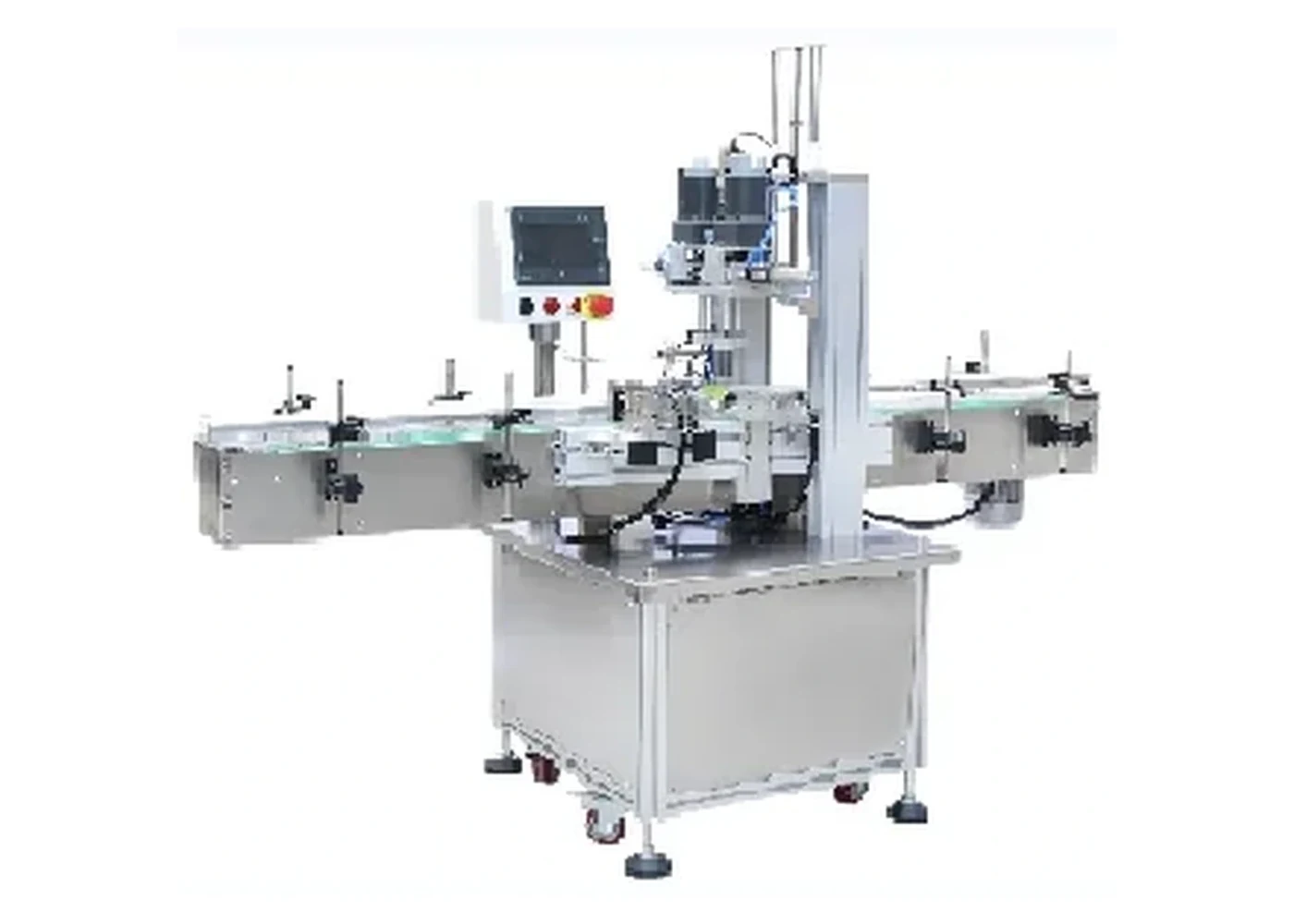
Compare the point at which operator loading, batch size and line balance justify automatic handling.
Explore this optionA semi-automatic unit may have a fast cycle, but real output depends on how lids are presented, how jars are loaded and how finished packs are removed and checked.
| Requirement | Why it matters | What to provide |
|---|---|---|
| Batch profile | Frequent short runs favour quick setup over complex automatic feeding. | Jars per batch, batches per day and SKU sequence. |
| Cap placement | Manual placement must be comfortable and repeatable. | How lids arrive, storage orientation and any liner/tamper feature. |
| Torque control | The machine needs a usable process setting and a separate verification method. | Target torque window and current quality check. |
| Tool changes | A flexible machine still needs the right chuck, guides and height settings. | Full jar and lid range, including extremes. |
Cycle rate should not be confused with sustained production output. Include operator loading, cap pickup, finished-pack checks and breaks in the capacity calculation.
Indicative dimensions and speeds are screening information, not an acceptance test.
It suits lower to medium volumes, variable batches and operations where manual lid placement remains acceptable but tightening needs more control.
Often yes, but sustained output depends on jar and lid staging, ergonomics and whether other tasks are combined at the station.
Potentially, with suitable support and settings. Plastic jar distortion and glass handling should be assessed using actual filled samples.
A semi-automatic capper can run quickly during the tightening stroke, but usable output also includes picking the correct lid, placing it squarely, loading and unloading the jar, making the quality check and replenishing materials.
Use the intended workstation, containers, lid presentation and filled jar weight. Do not base a labour or capacity decision on an isolated machine cycle with parts already positioned.
Run the smallest and largest jars, the widest or smoothest lid and any format that is difficult to hold square. Record tooling and height changes rather than relying on memory.
After setup or changeover, inspect and measure a defined sample before releasing the batch. Keep the setting record with the approved jar-and-lid combination.
| Observation | Why it changes real output | What to record |
|---|---|---|
| Lid pickup and placement | Lids that arrive nested, inverted or difficult to separate create variable operator time. | Presentation method, average handling time and placement defects. |
| Jar loading | Heavy, hot, wet or unstable jars can require two-handed control or a fixture. | Filled weight, contact area, fixture and safe operator method. |
| Capping and release | The stroke is only one part of the cycle, and dwell may be needed for a stable result. | Machine settings, cycle time and measured closure result. |
| Batch change | Tooling, height and clamp changes can dominate short production runs. | Change parts, elapsed time and first-off approval steps. |
Prepare an operator-assisted trial · Define the torque method
Record which tasks remain with the operator: jar loading, lid placement, cycle initiation, finished-pack checking and unloading. This makes it possible to compare labour, ergonomics and sustained output with an automatic route later.
The automation comparison helps define the trigger for the next step. Include accessible cleaning, controlled changeover and repeatable first-off checks from the start; the maintenance and changeover guide provides the operating framework.
Send your jar, lid, product and target output. Lancing will help you identify a practical machine route and the samples needed for confirmation.