Jar loading
Use normal filled weight and production temperature. Confirm the operator can load the jar squarely without contacting hot surfaces, wet product or an unacceptable artwork area.

A compact screw-capping route for smaller batches where an operator places the lid and the machine provides controlled bottle support and repeatable tightening.
Start with real samples. Your jar, lid and target output provide a more reliable recommendation than choosing by model number alone.
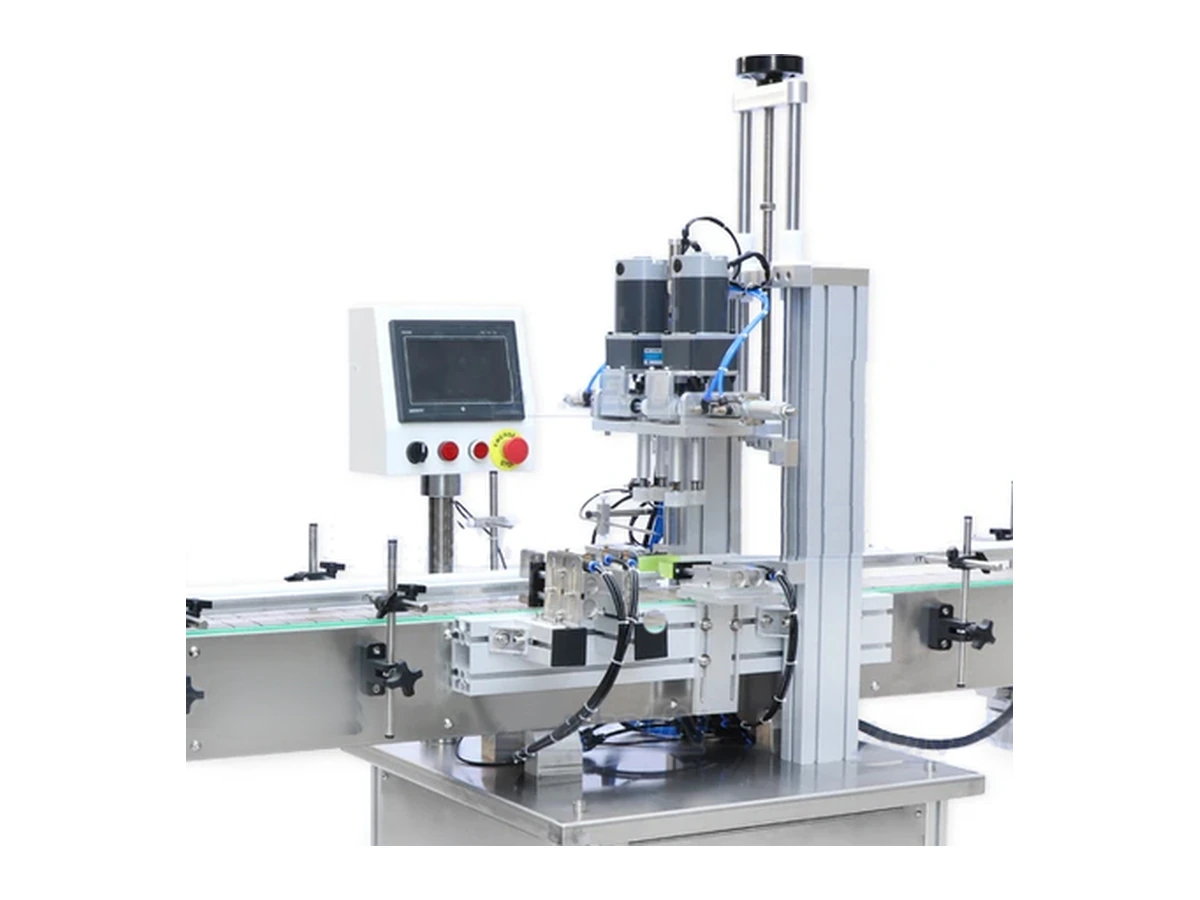
Equipment example shown; the final configuration is confirmed for your jars and lids.
These photographs show capping and related packaging equipment. They do not identify a confirmed configuration for this machine; we confirm tooling and guarding for your jars and lids during project review.
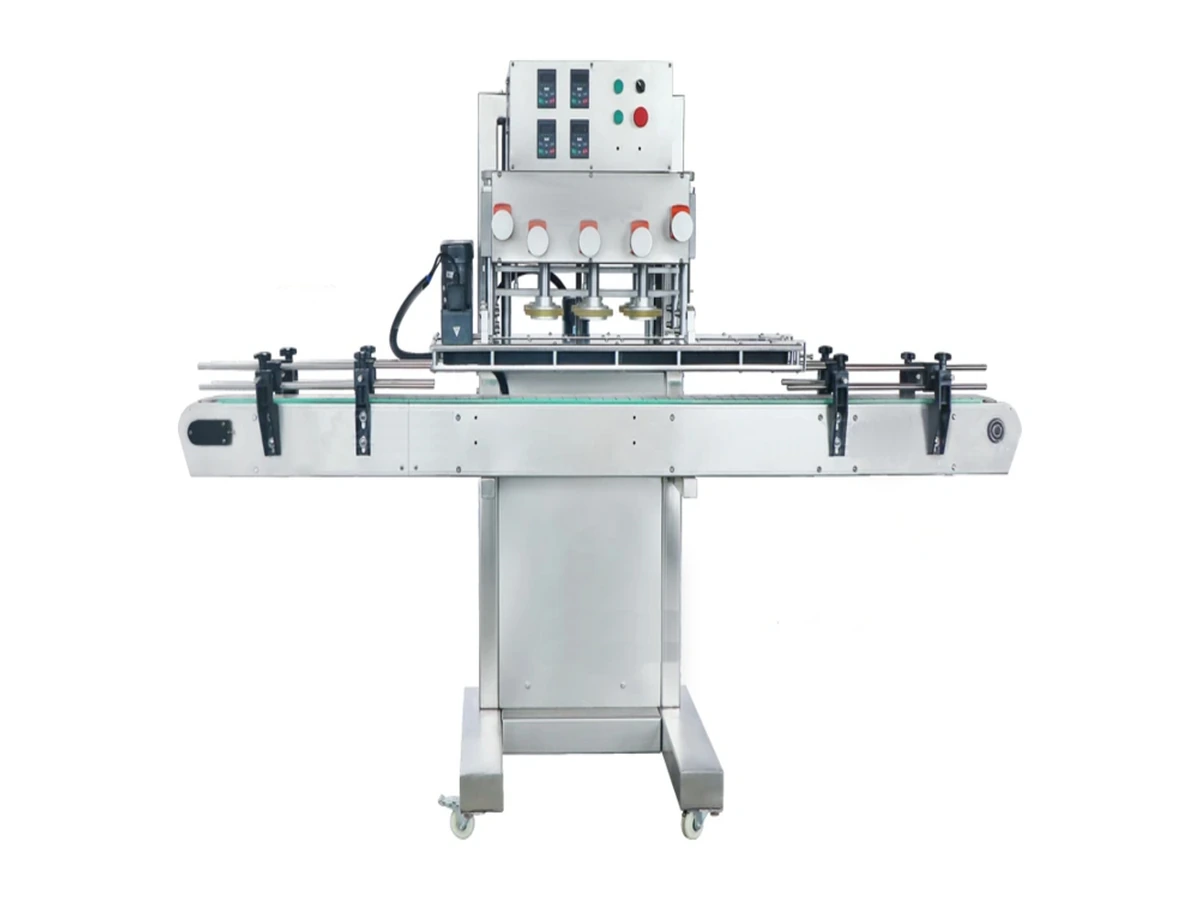
Ask for a demonstration using your own jars and lids before the machine is specified.
Your confirmed specification will be based on real jars, lids, product conditions and an agreed trial.
| Indicative output | 20–60 containers per minute, format and operator dependent |
|---|---|
| Indicative cap range | Ø20–60 mm; custom tooling may extend the range |
| Indicative jar height | 100–300 mm |
| Operation | Manual cap placement with automatic clamping and capping cycle |
| Utilities | 110/220 V supply and compressed air; confirmed for the agreed machine configuration |
Planning figures only. Final capability is confirmed against your production jars, lids, product conditions and required line layout.
Short and medium jar batches, frequent product changes, development rooms, rework and operations moving away from hand tightening.
Controlled closure application can reduce variation from hand tightening, make the cycle easier to train and provide a clearer basis for quality checks.
It does not remove the need to validate seal performance. Torque, lid height, vacuum, leak testing and visual finish should be defined for the actual packed product.
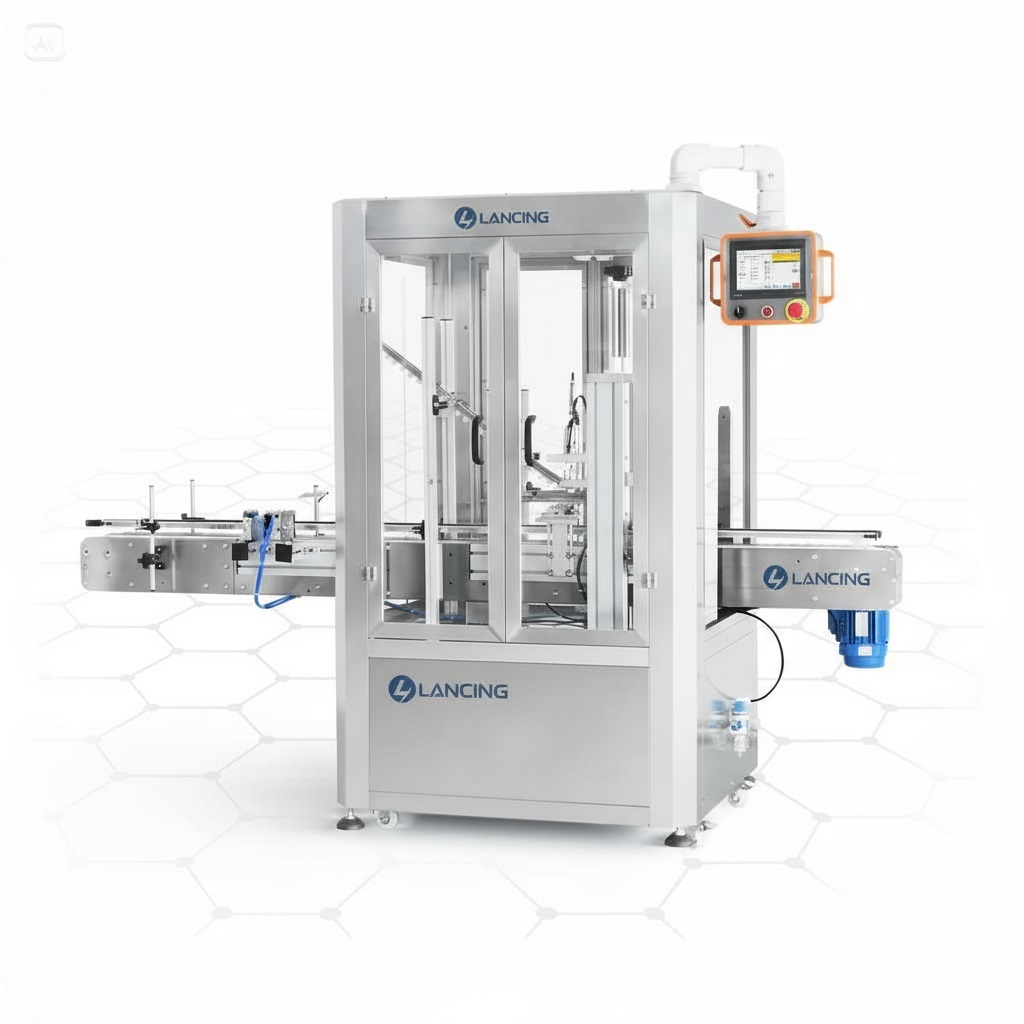
Confirm the widest lid, lowest and tallest jar, cap liner, torque target, filled jar stability and whether product residue can reach the thread.
Yes. This route normally uses manual lid placement, while the machine clamps the jar and completes the tightening cycle.
Potentially, using approved tooling and settings. Samples should be tested because lid diameter, skirt depth, jar height and thread behaviour affect the setup.
It can improve repeatability and reduce operator strain. Actual output depends on lid presentation, operator loading and the approved cycle.
Ready to check this machine against your pack? Send your jars, lids and target output, or view related Lancing machine information.
Use normal filled weight and production temperature. Confirm the operator can load the jar squarely without contacting hot surfaces, wet product or an unacceptable artwork area.
Present lids as they arrive in production. Check that the operator can identify orientation, place the lid squarely and avoid starting a damaged or contaminated thread.
Measure the agreed application or removal result with a written method. Repeat after a representative setup change and retain first-off samples with the setting record.
Published output is format and operator dependent. Time a representative batch including loading, unloading, lid handling, normal quality checks and material replenishment before setting labour or capacity assumptions.
The operator remains part of the process: selecting the correct lid, placing it squarely, presenting the jar and removing the finished pack. The trial should therefore measure both machine repeatability and the practical operator cycle.
Send your jar, lid, product and target output. Lancing will help you identify a practical machine route and the samples needed for confirmation.