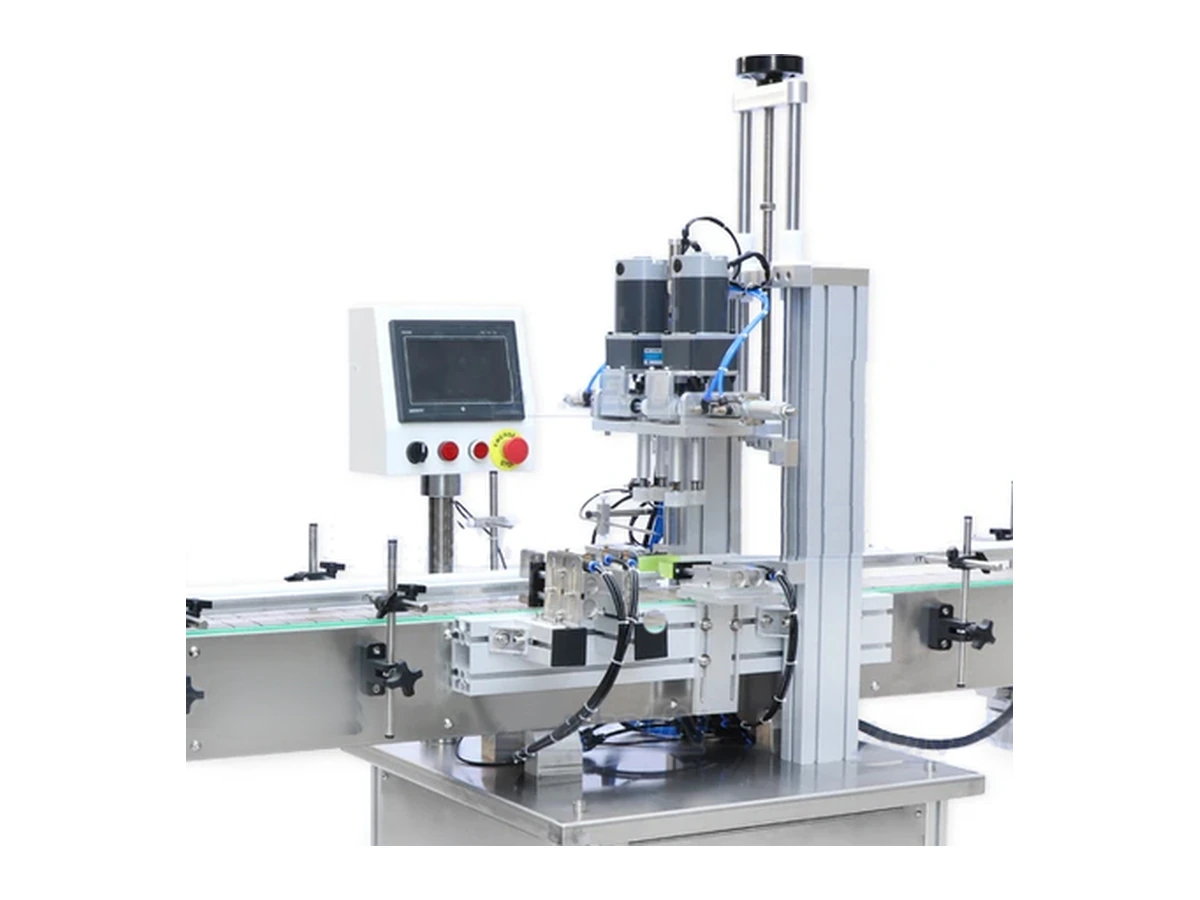
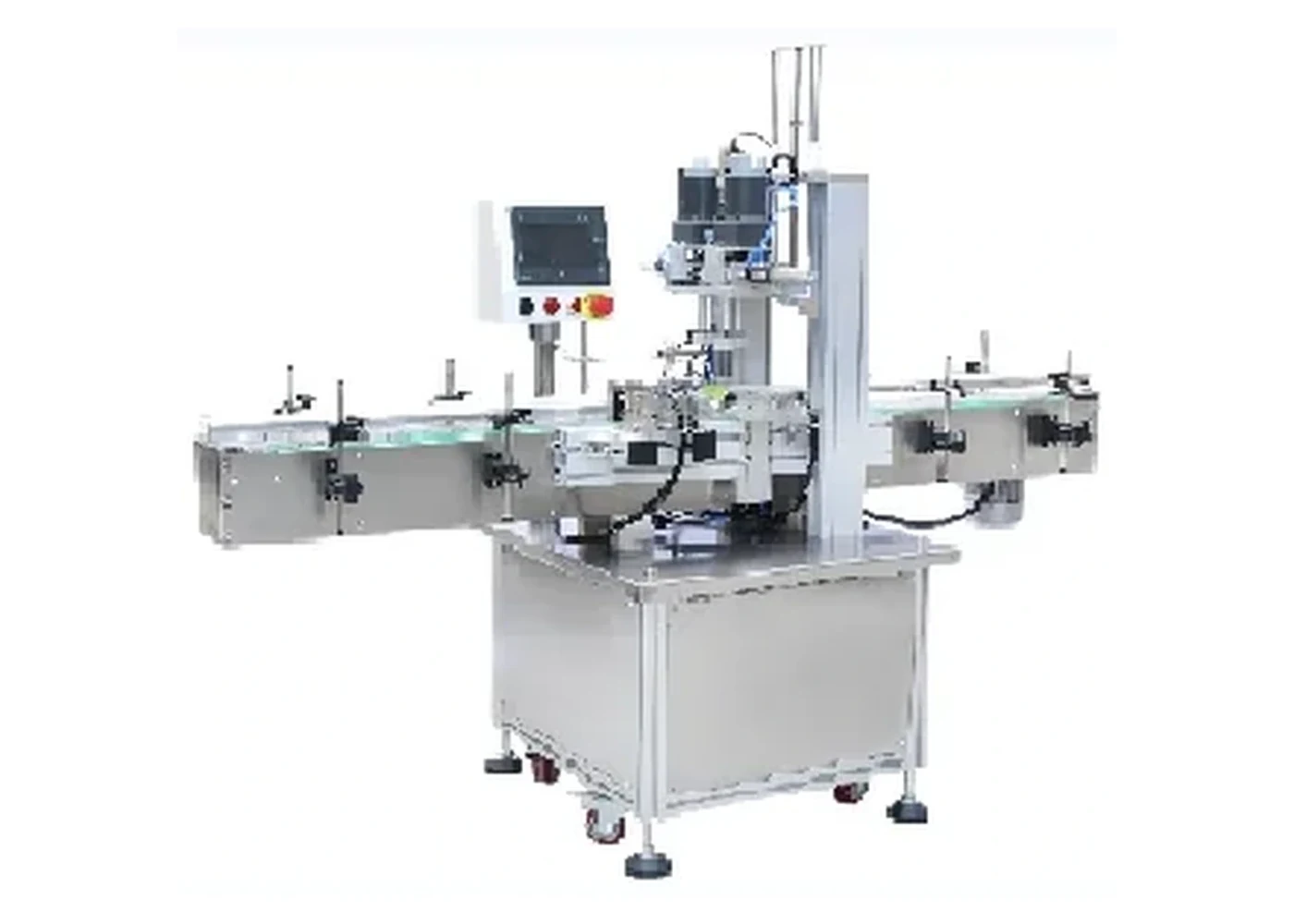
Semi-automatic screw jar capper
Chuck-style controlled tightening with manual lid placement for flexible batches.
Explore this option
Threaded lids can be applied by chuck, compact inline or spindle cappers. The right choice depends on cap grip, torque window, jar strength, pre-placement and production rate.
Start with real samples. Your jar, lid and target output provide a more reliable recommendation than choosing by model number alone.
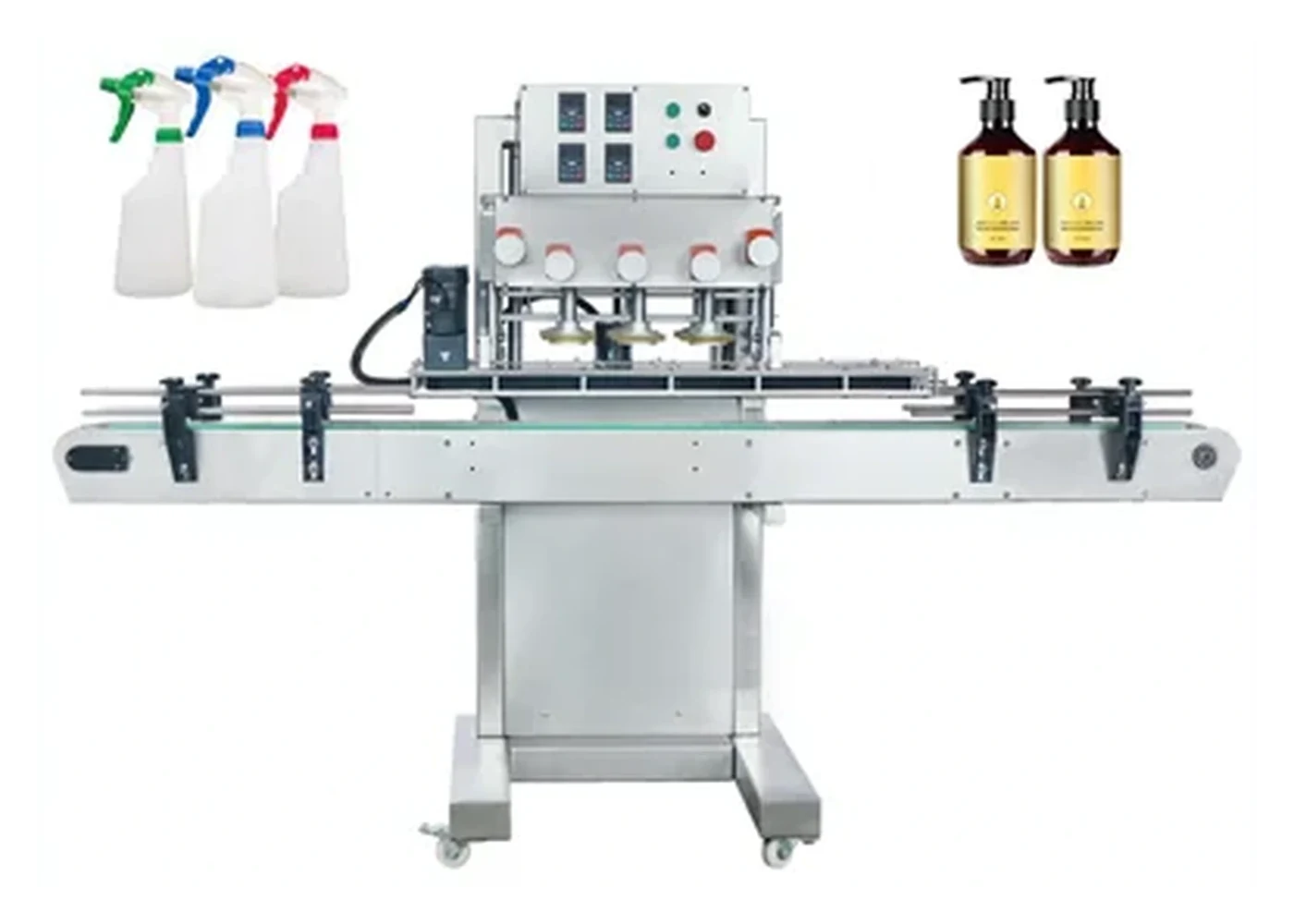
A small cap with deep knurling behaves differently from a smooth wide lid. The head, contact material and jar support must match the pack.
Chuck-style controlled tightening with manual lid placement for flexible batches.
Explore this option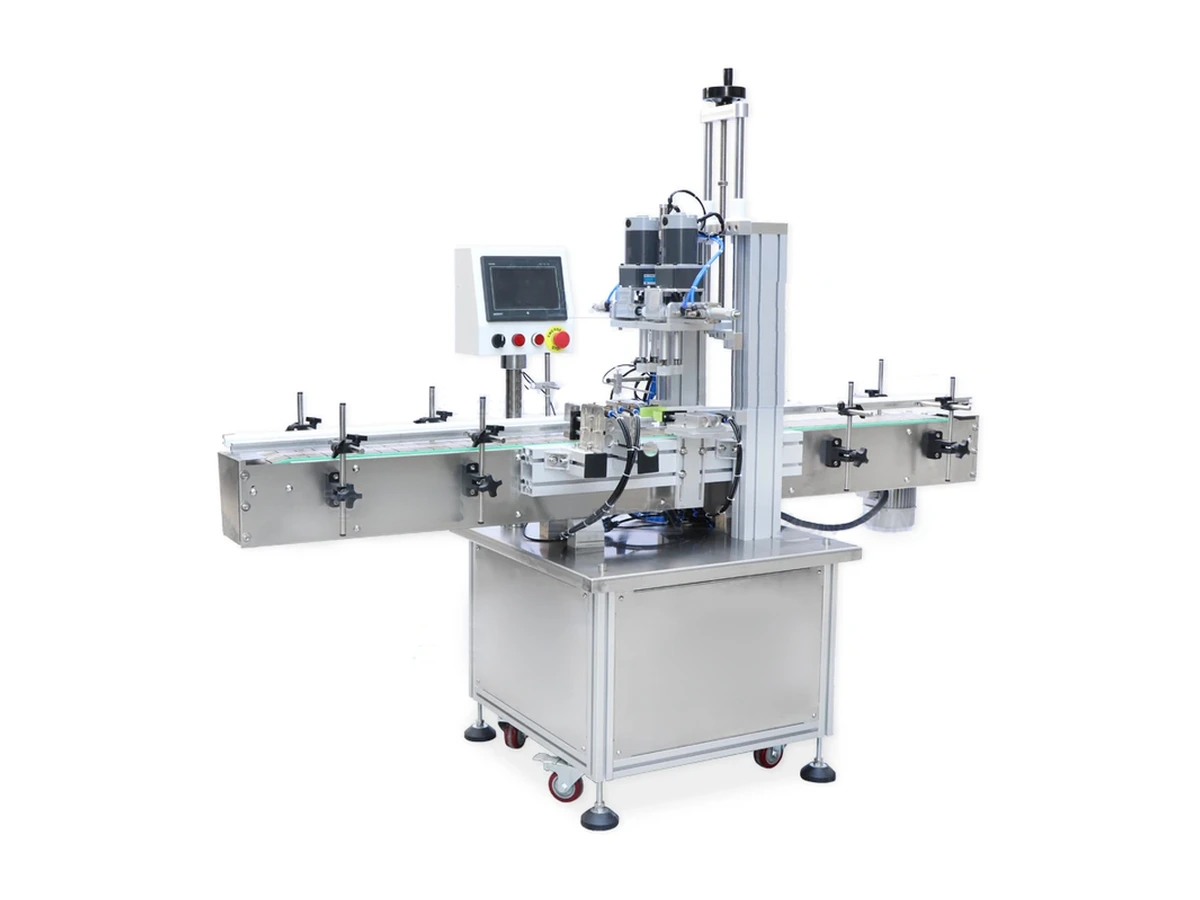
Conveyorised tightening for an approved threaded jar and lid range.
Explore this option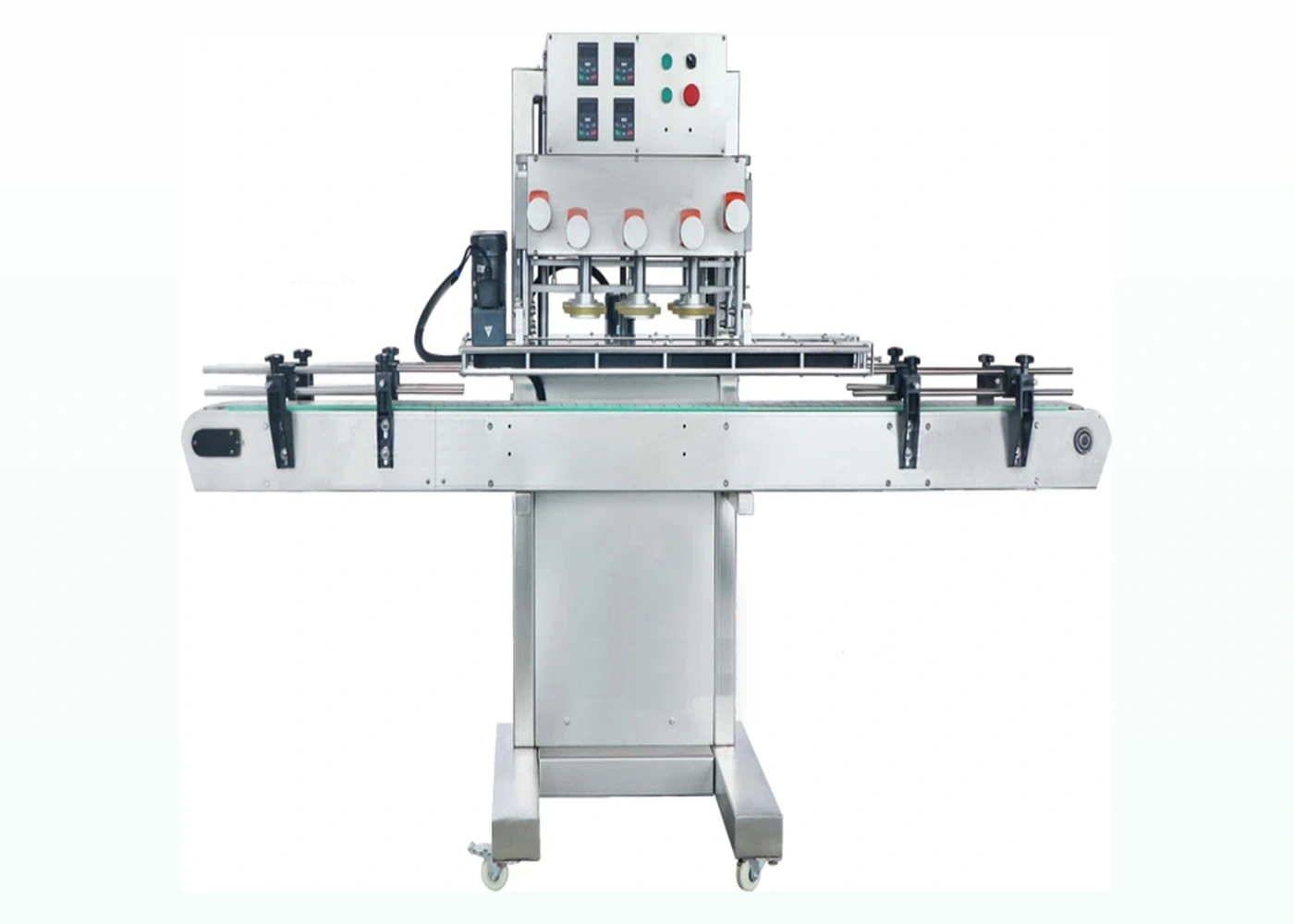
Progressive multi-wheel tightening for suitable pre-placed lids and higher output.
Explore this optionApplication torque should create a reliable pack without damaging the cap, liner, thread or jar. Removal torque can change with time, temperature and product exposure.
| Decision | Why it matters | What to provide |
|---|---|---|
| Chuck or spindle | Chuck heads suit a defined cycle; spindles support continuous progressive tightening. | Output, cap geometry, pre-placement and format range. |
| Manual or fed lids | Cap placement can be the main output constraint. | Bulk cap condition, operator plan and target speed. |
| Jar support | The container must resist rotation without crushing or scuffing. | Filled samples, wall strength, shoulder and label area. |
| Torque verification | A machine setting is not the same as a measured closure result. | Torque tester method, limits and sampling plan. |
Torque results are influenced by the complete pack and test method. Agree the test instrument, timing and sample conditioning before comparing readings.
Indicative dimensions and speeds are screening information, not an acceptance test.
It is a capping route configured to apply threaded closures within a repeatable process window, with the finished result checked using an appropriate torque test.
A wider lid changes leverage, grip area, skirt deflection and feeding behaviour. It may need a larger chuck, softer contact or different support.
No. A machine may reveal inconsistent threads more clearly, but defective jar or lid moulding should be controlled at source.
Check that the cap is centred, the first thread has engaged and the jar is not rotating or leaning as it enters the capping head.
Record chuck, wheel, pressure and anti-rotation settings. Inspect for cap slip, back-off, skirt damage and jar deformation.
Use the approved torque method and inspect cross-thread evidence before changing the machine setting.
For broader bottle screw-capping applications, use Screw Cappers UK. For jar-specific acceptance, continue with the jar-cap torque guide.
| Project condition | Route to investigate first | Evidence required |
|---|---|---|
| Operator places each lid and jar | Semi-automatic chuck tightening may provide a compact controlled cycle. | Operator cycle, square placement, tooling, torque method and safe access. |
| Continuous conveyor flow | Inline spindle tightening may suit stable jars with reliable pre-placement. | Jar spacing, side-belt grip, wheel contact, stops, restarts and accepted output. |
| Highly decorative or mark-sensitive cap | Trial both contact methods where credible. | Approved cosmetic limit, retained samples and settings that reproduce the result. |
| Large variation in closure geometry | Compare tooling and adjustment scope before selecting the platform. | Complete format matrix and the change parts required for each approved closure. |
Use identical jars, caps, conditioning time and quality checks so the result reflects the tightening method rather than a changed test.
Open the chuck-versus-spindle guideSend your jar, lid, product and target output. Lancing will help you identify a practical machine route and the samples needed for confirmation.