Automatic capping
Pro Series capping machine
Review the capping head, container control and production-line arrangement before deciding which details must be proven in your own sample trial.
Watch on YouTube
Watch two relevant Lancing capping demonstrations to compare closure handling, tightening action and operator access. Then use your own jars, lids and target output to define a practical sample trial.
Start with real samples. Your jar, lid and target output provide a more reliable recommendation than choosing by model number alone.
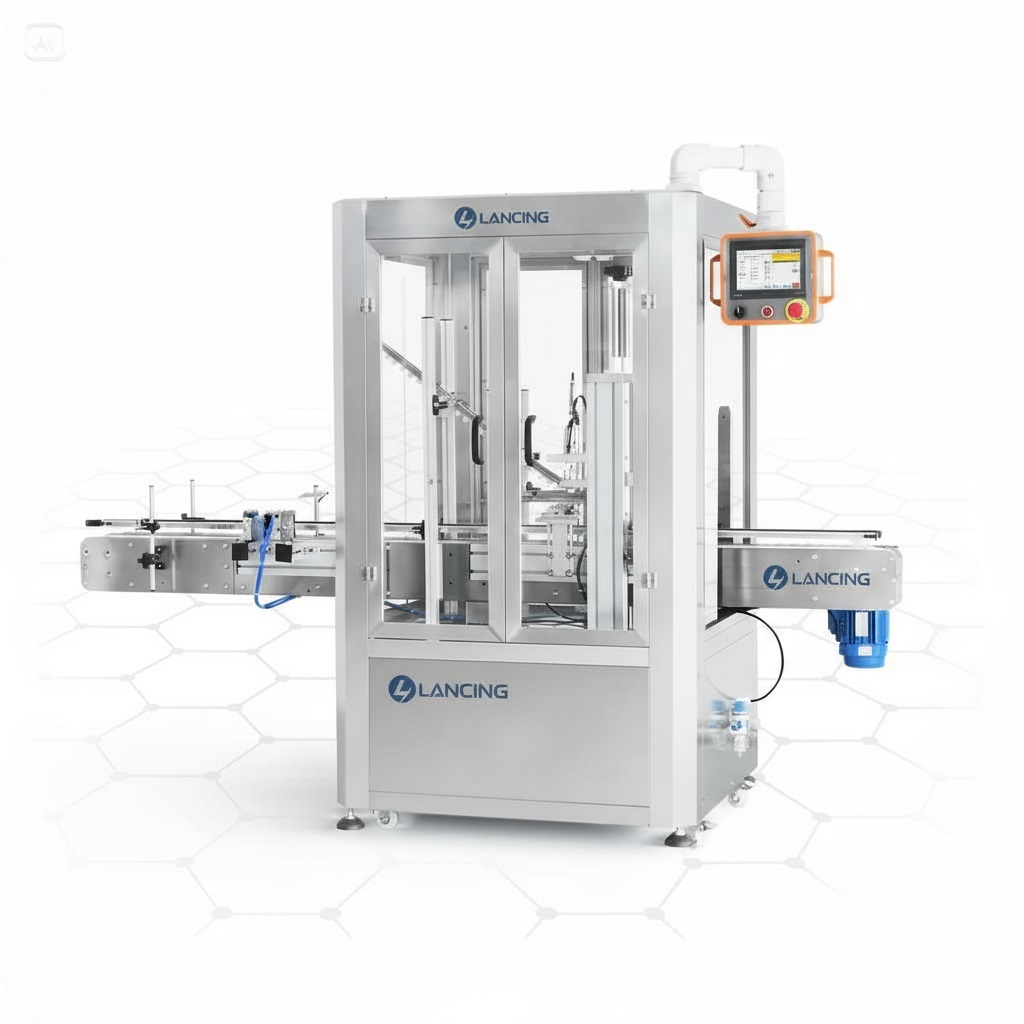
Look at jar control, lid presentation, tightening contact and machine access. A useful shortlist still depends on testing your actual components.
Review the capping head, container control and production-line arrangement before deciding which details must be proven in your own sample trial.
Watch on YouTubeSee progressive wheel contact and inline container handling, then check whether your pre-placed lid, jar stability and required torque window suit this approach.
Watch on YouTubeA stable, well-lit phone video can reveal jar spacing, manual handling and where the line is losing time. Pair it with physical samples for the strongest first review.
A video helps you understand the machine concept, but compatibility and output still need to be confirmed using your jars, lids and agreed trial conditions.
Yes. A clear clip showing lid placement, capping, discharge and the fault can speed up an initial review. Keep failed samples for inspection as well.
Locally hosted first-party footage showing closures moving through an automatic feed route.
Pause the footage at the escape, track, chute and placement point. Ask how an inverted, nested or damaged cap is rejected; what happens when the capper stops; how low-cap condition is detected; and which parts change for another lid.
During a real sample trial, record the same views using production caps. Video is most useful when it is linked to the defect log, machine settings and retained samples rather than used as a general demonstration alone.
Send your jar, lid, product and target output. Lancing will help you identify a practical machine route and the samples needed for confirmation.