
How should a food jar capping machine be cleaned?
A food jar capper should be cleaned under the food business’s documented hygiene system, using a method matched to the product, contamination risk, machine construction and verified manufacturer instructions.
Use representative evidence. Machine selection should define cleaning access and contamination boundaries before purchase rather than assuming every capper is suitable for unrestricted washdown.
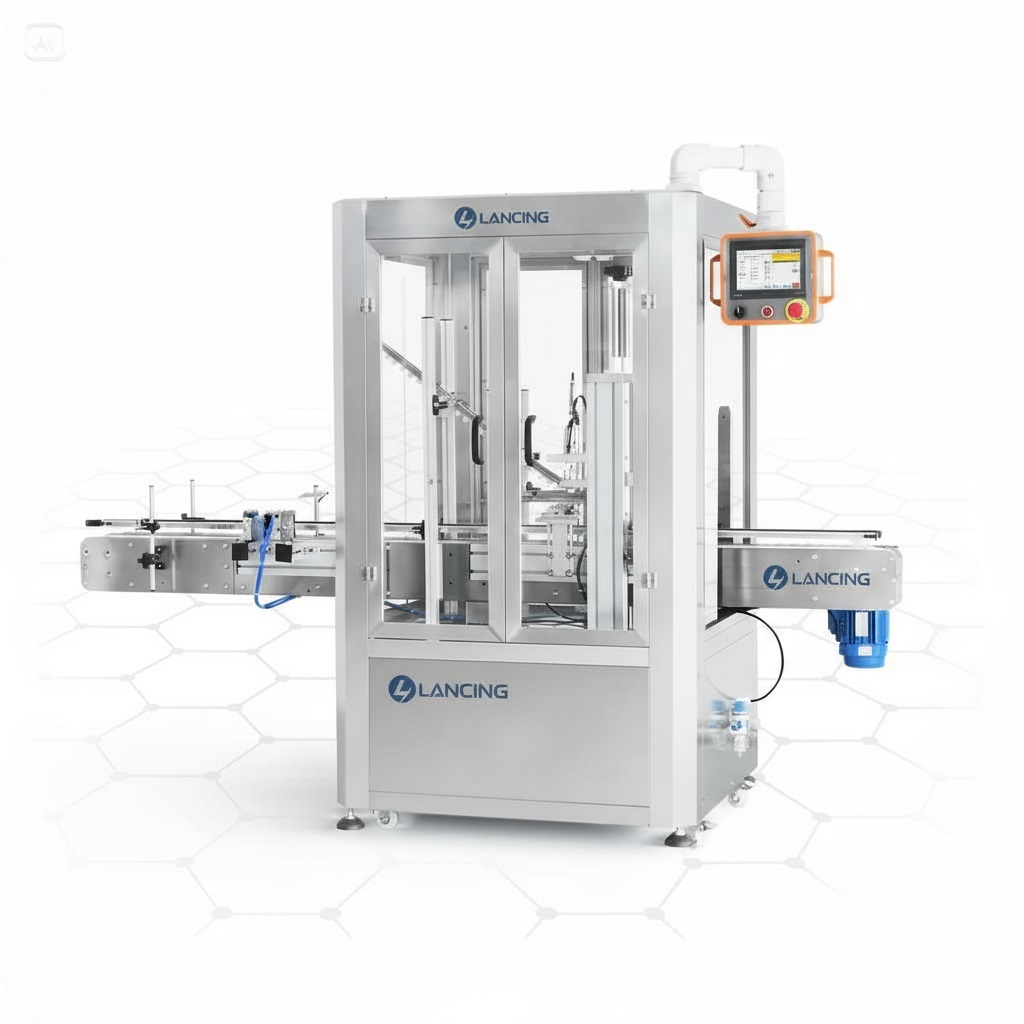
Identify where product, closures and cleaning residues can collect.
The cleaning method belongs within the food business’s wider food-safety management system. The machine review should support that system by identifying access, materials, removable parts and areas affected by spills or broken packs.
| Zone to review | Typical contamination route | Evidence to agree |
|---|---|---|
| Jar path | Product spills, broken glass, labels and residue on guides or belts | Access method, cleaning frequency and inspection point |
| Lid path | Dust, damaged closures, liner debris and product transferred from jar finishes | Feeder and chute cleaning method; control of removed lids |
| Closing area | Product splash, lubricant migration or debris at chucks and contact parts | Safe isolation, removable tooling and approved cleaning materials |
| Below conveyor level | Drips, fragments and inaccessible residues | Drainage, guarding access and post-clean inspection |
Should a food jar capper be wet cleaned, foam cleaned or dry cleaned?
The cleaning method must be selected by the food business for the actual product and hazard, then checked against the machine’s verified construction and manufacturer instructions.
Do not assume that stainless appearance means full washdown suitability. Water ingress protection, bearings, motors, sensors, belts, lubricants and electrical enclosures all matter. Where dry cleaning is required, access and capture of dust or crumbs may be more important than drainage.
Government food-hygiene guidance requires food businesses to follow a system for managing food safety, including cleaning and avoiding cross-contamination. See food hygiene for businesses.
How should allergen or product changeover affect the capping-machine specification?
The specification should identify contact and splash zones, removable parts, difficult-to-access surfaces and the evidence needed to confirm the approved cleaning procedure between products.
The capper may not directly contact the food, but contaminated jar finishes, spills and operator handling can transfer product to guides, belts and closures. The customer’s allergen controls and validation determine the required level of segregation and cleaning evidence.
Include cleaning steps and first-off checks in the maintenance and changeover record.
What must happen before an operator cleans inside a jar capper?
The machine must be placed in the safe state defined by its instructions and the site’s isolation procedure before access to hazardous movement, stored energy or hot surfaces.
Cleaning access should not depend on defeating guards or reaching around moving parts. The site risk assessment must cover electrical, pneumatic, mechanical, thermal and product hazards, plus broken glass and cleaning chemicals where applicable.
Review the separate safety and guarding guide.
Which records should support food jar-capper hygiene?
Useful records include the cleaning task, method, responsible person, date and time, inspection result, released format and any corrective action taken.
The food business may also link records to product and allergen changeover, retained samples, closure checks and maintenance interventions. UK guidance describes a food-safety management system as written processes, checks, rules and records based on HACCP principles.
See the official food safety management systems guidance.
Write the capper cleaning and release method around the actual product and contamination route.
A useful cleaning instruction identifies what can soil the machine, which parts contact jars or lids, how residues are removed, how the machine is protected during cleaning and how correct reassembly is verified before production restarts.
| Control | Record | Reason |
|---|---|---|
| Pre-clean condition | Product, allergen/recipe, visible contamination, affected zone and production batch. | Defines the contamination challenge rather than applying a generic routine. |
| Safe preparation | Stop, isolation, guarding/access and dismantled parts. | Prevents unexpected movement and loss of components during cleaning. |
| Cleaning method | Approved chemical or dry method, concentration where specified, contact time, tools and rinse/dry steps. | Supports consistent execution without assuming every machine is suitable for wet cleaning. |
| Inspection and release | Visual or other approved verification, reassembly, first-off pack and sign-off. | Confirms that cleaning did not leave residue, loose parts or incorrect setup. |
| Deviation | Unacceptable result, corrective action, repeat clean and affected production. | Keeps failed cleaning evidence inside the food-safety management process. |
The Food Standards Agency’s food-safety management guidance includes cleaning, allergen controls, staff training and records. Use the site’s approved system and competent assessment for the actual product and process.
Provide the proposed cleaning method before final design review
State whether the area uses dry cleaning, controlled wipe-down, foam or wet methods; identify the chemicals; and define the access, drainage and material restrictions that the machinery must accommodate.
Review a food-jar application