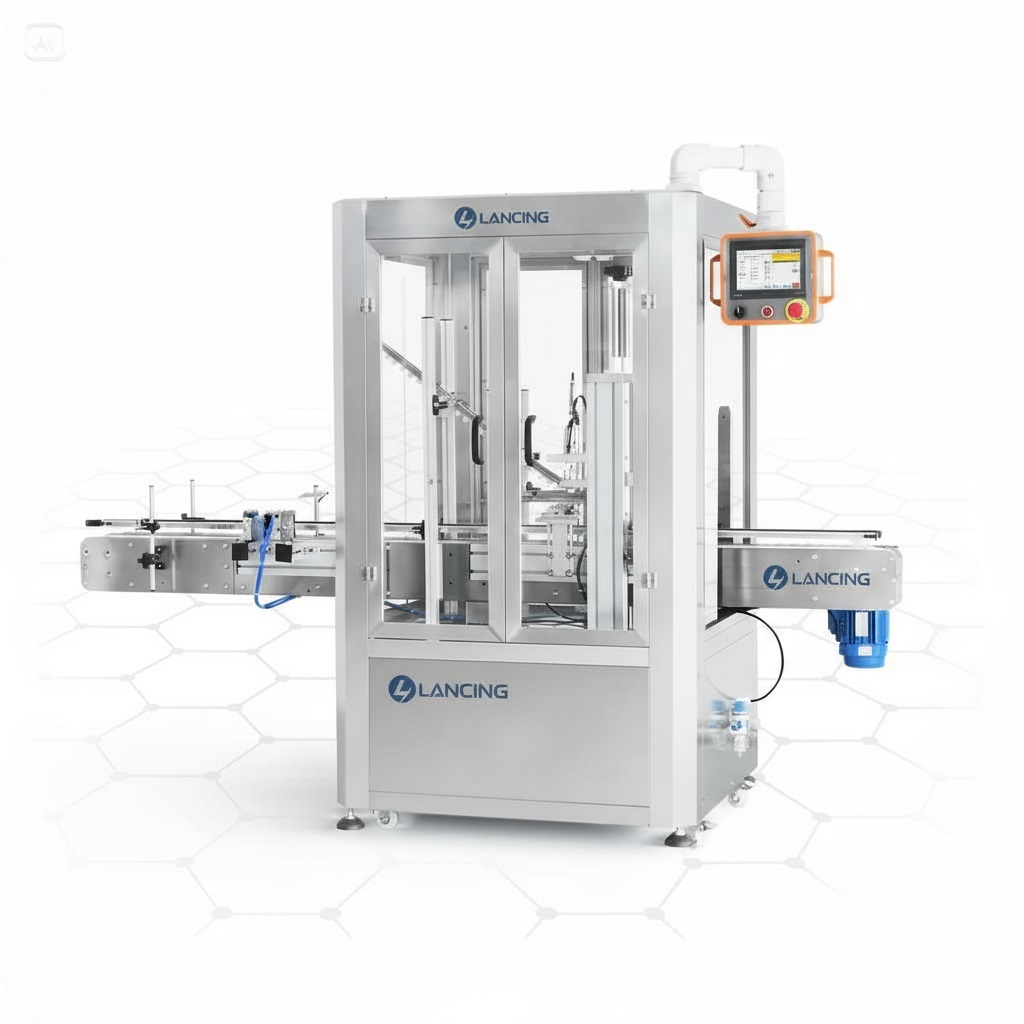
Twist-off glass jar capper
Dedicated metal lug-lid feeding and closing for compatible food jar finishes.
Explore this option
Glass jars offer dimensional stability but require controlled transfer, finish protection and a capping method matched to the lid. Metal lug and continuous-thread closures should be treated as distinct routes.
Start with real samples. Your jar, lid and target output provide a more reliable recommendation than choosing by model number alone.
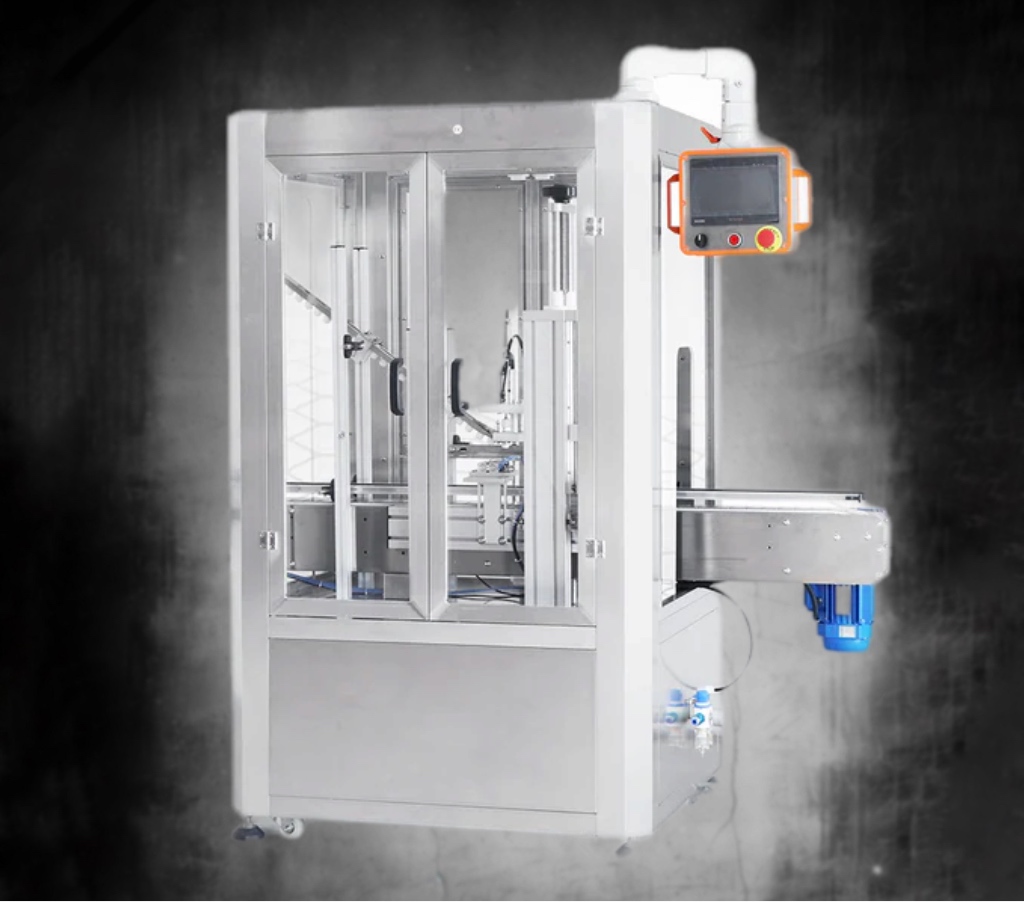
Food jars with metal lug lids may require twist-off or vacuum-cap processing, while cosmetic and dry-product jars can use continuous-thread screw capping.
Dedicated metal lug-lid feeding and closing for compatible food jar finishes.
Explore this option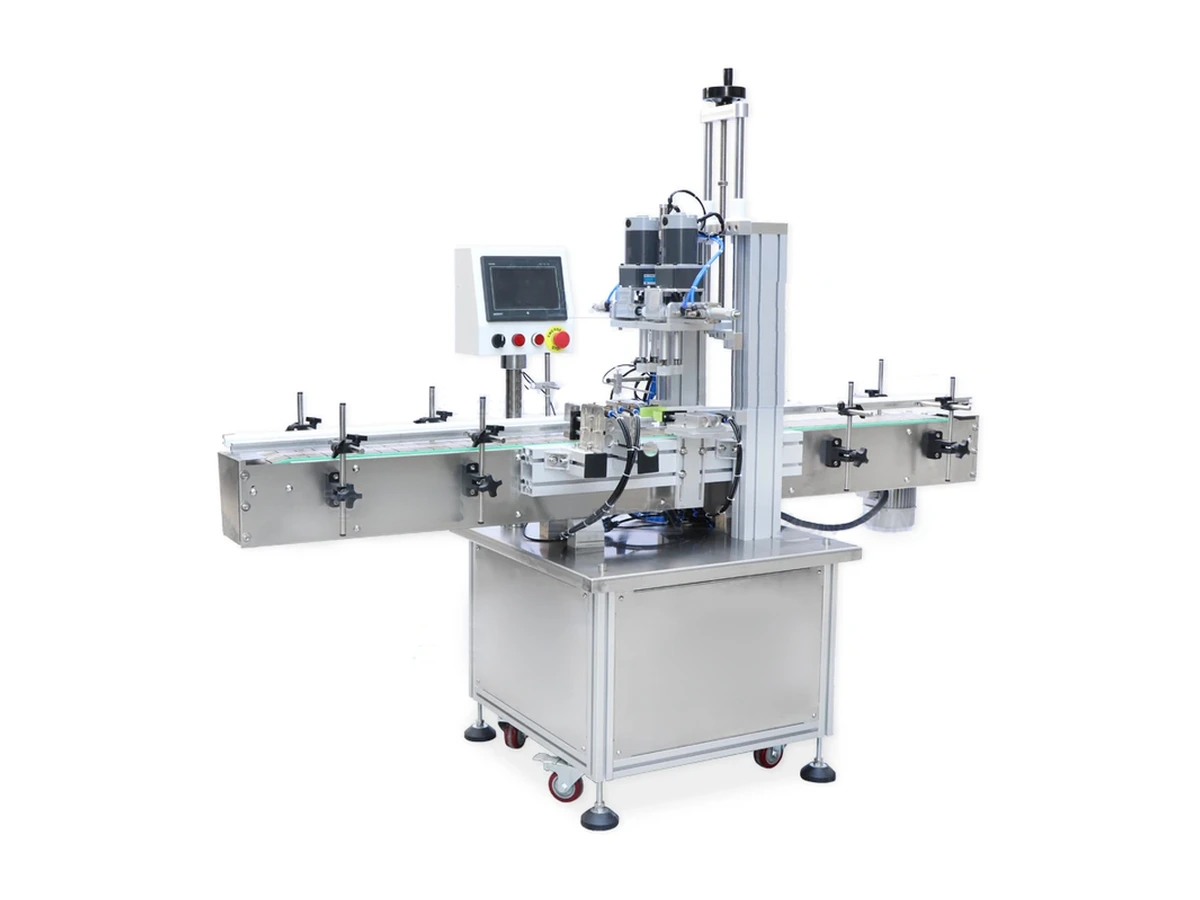
Torque-controlled closing for glass jars using continuous threaded closures.
Explore this option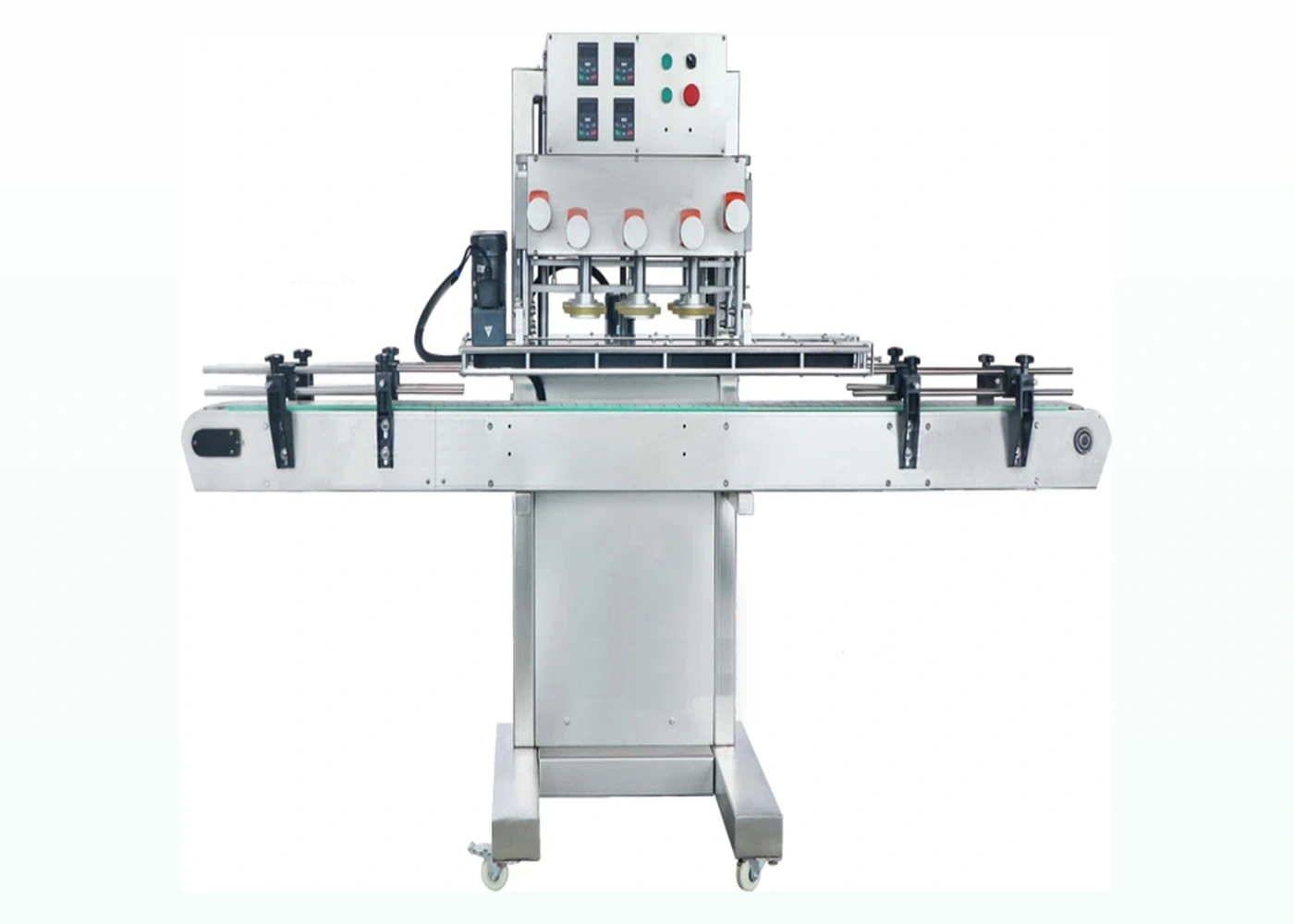
Review product temperature, headspace and finished vacuum where the pack requires a vacuum seal.
Explore this optionThe machine should guide jars without impact or uncontrolled pressure, while keeping the sealing surface clean and presenting the lid squarely.
| Check | Why it matters | What to provide |
|---|---|---|
| Closure family | Metal lug and continuous-thread lids need different application routes. | Lid samples and jar finish information. |
| Jar variation | Glass tolerances affect lid engagement, cap height and sealing. | Samples from several production batches. |
| Handling | Impact and excessive clamp force can damage jars or finishes. | Filled weight, transfer layout and breakage policy. |
| Seal process | Torque or vacuum acceptance should be linked to the product process. | Quality limits, test method and cooling conditions. |
Glass safety and product process controls should be incorporated into the overall line risk assessment and quality plan, not left solely to the capper setting.
Indicative dimensions and speeds are screening information, not an acceptance test.
Only if the closure methods, dimensions and handling requirements are compatible. Metal lug lids and continuous-thread lids usually need different tooling or machines.
The line uses controlled transfers, correctly positioned guides, suitable clamp pressure and a layout that avoids impacts; actual jars must be trialled.
Threaded glass-jar closures may use torque tests, while twist-off food jars may also need vacuum, cap-button and leak checks.
Glass finish and body variation can affect cap height, lug or thread engagement, side-guide contact and transfer stability. Build the sample set from normal batches and include any historically difficult but acceptable component.
Glass jars commonly use metal twist-off or lug closures where cap application, headspace, cooling and vacuum evidence belong to the pack process. A foil-lined induction system is a different construction and should be considered only when the jar finish, screw cap and liner suppliers confirm compatibility.
Specify the approved lid, application method, fill/process condition, headspace approach and finished vacuum or closure-integrity checks.
Review twist-off cappingConfirm the complete glass, finish, cap and liner construction before planning cap application and downstream induction sealing.
Review induction sealingSend your jar, lid, product and target output. Lancing will help you identify a practical machine route and the samples needed for confirmation.