Availability asks “was the process able to run?”
Record unplanned machine, feeder, jar-supply, downstream and inspection stops separately. Keep planned changeover, cleaning and breaks visible rather than silently excluding them.

Separate availability, running performance and quality, then code every stop and reject to the part of the jar-capping process that caused it.
Use production evidence. Final selection and acceptance depend on representative jars, lids, process conditions and agreed checks.
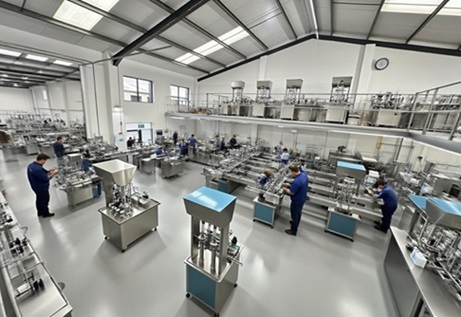
Measure agreed production time, actual running time, total jars processed and accepted good jars, then code every stop and reject to its real source. Availability, running performance and quality can be calculated from the customer’s own trial data, but the result is only meaningful when the reference rate, exclusions, format, staffing, cap-refill method and good-pack definition are stated.
Record unplanned machine, feeder, jar-supply, downstream and inspection stops separately. Keep planned changeover, cleaning and breaks visible rather than silently excluding them.
Compare actual total output with a stated reference rate for the same pack and running minutes. Do not use an unrelated maximum or empty-container test.
Count only jars that meet the agreed closure and visual criteria. Record every reject category, rework and held quantity so quality loss is not hidden.
This calculator does not predict or guarantee a machine result. Enter an agreed observation or trial period and the reference running rate used for that exact jar-capping format.
| Loss family | Examples | Evidence to record |
|---|---|---|
| Upstream starvation | No filled jar, poor spacing, filler stop or empty infeed buffer. | Start/end time, upstream state, jar count and restart condition. |
| Lid supply | Refill, low level, bowl/track jam, orientation reject, chute pressure or placement miss. | Lid format/batch, location, operator action and affected jars. |
| Jar handling | Tip, jam, rotation, guide conflict, spacing or unstable transfer. | Jar format, filled weight, line position, video/photo and setting. |
| Capping mechanism | Chuck, spindle, belt, clamp, head, air, drive, tooling or sensor fault. | Alarm, component condition, maintenance action and first-off result. |
| Inspection/reject | False reject, inspection fault, reject confirmation, full bin or reconciliation stop. | Defect code, inspected/rejected counts, challenge result and bypass status. |
| Downstream blocked | Inspection, labeller, coder, accumulation, packing or conveyor unavailable. | Blocked duration, buffer condition and line-control sequence. |
| Quality hold | Torque, vacuum, cap height, leak, marking or component issue. | Sample result, affected time/batch, disposition and corrective action. |
| Planned activity | Changeover, cleaning, break, scheduled maintenance or trial sampling. | Planned standard, actual time, first-off approval and deviation. |
Write down when the trial starts and ends, what counts as running, which stops are planned, how rework is treated and the exact good-pack acceptance criteria.
Keep the event log and counts behind any percentage. A single OEE number cannot explain a cap-feeder jam, component fault or changing vacuum trend.
Do not compare an operator-fed short batch with a fully fed line unless the labour, replenishment, inspection and changeover boundaries are aligned.
Review recurring loss families by format and component batch. Confirm that an apparent improvement did not come from a different product condition or relaxed reject rule.
Continue with the sustained output guide, lid-feeding evidence and inspection and reject guide.
OEE is commonly used to combine availability, running performance and quality. For a jar-capping project, keep the underlying time, rate and good-pack data visible and define the complete capping-cell boundary before interpreting the percentage.
Include it in the complete capping-cell result when the feeder is part of the required production process, while coding it separately so it is not mistaken for a capping-head fault.
Use a documented rate agreed for the actual jar, lid, product condition and operating model. Do not use a generic maximum from another format or an empty-container demonstration.
It can appear above 100% when the chosen reference rate is lower than the observed running rate or when time/count inputs are inconsistent. Review the basis rather than accepting a distorted result.
Long enough to include the normal refill, inspection, minor-stop and operator events relevant to the production decision. The exact duration and format sequence should be agreed in the trial or contract.
Send the format matrix, current good output, stop log, reject categories, staffing, lid-loading method, changeover time, surrounding-line constraints and representative jars and lids.
Send your jar, lid, product and target output. Lancing will help you identify a practical machine route and the samples needed for confirmation.