
Compact Automatic Jar Capper
A compact inline screw capper for jar projects that need conveyorised handling and repeatable tightening without the footprint of a larger high-speed spindle system.
Start with real samples. Your jar, lid and target output provide a more reliable recommendation than choosing by model number alone.
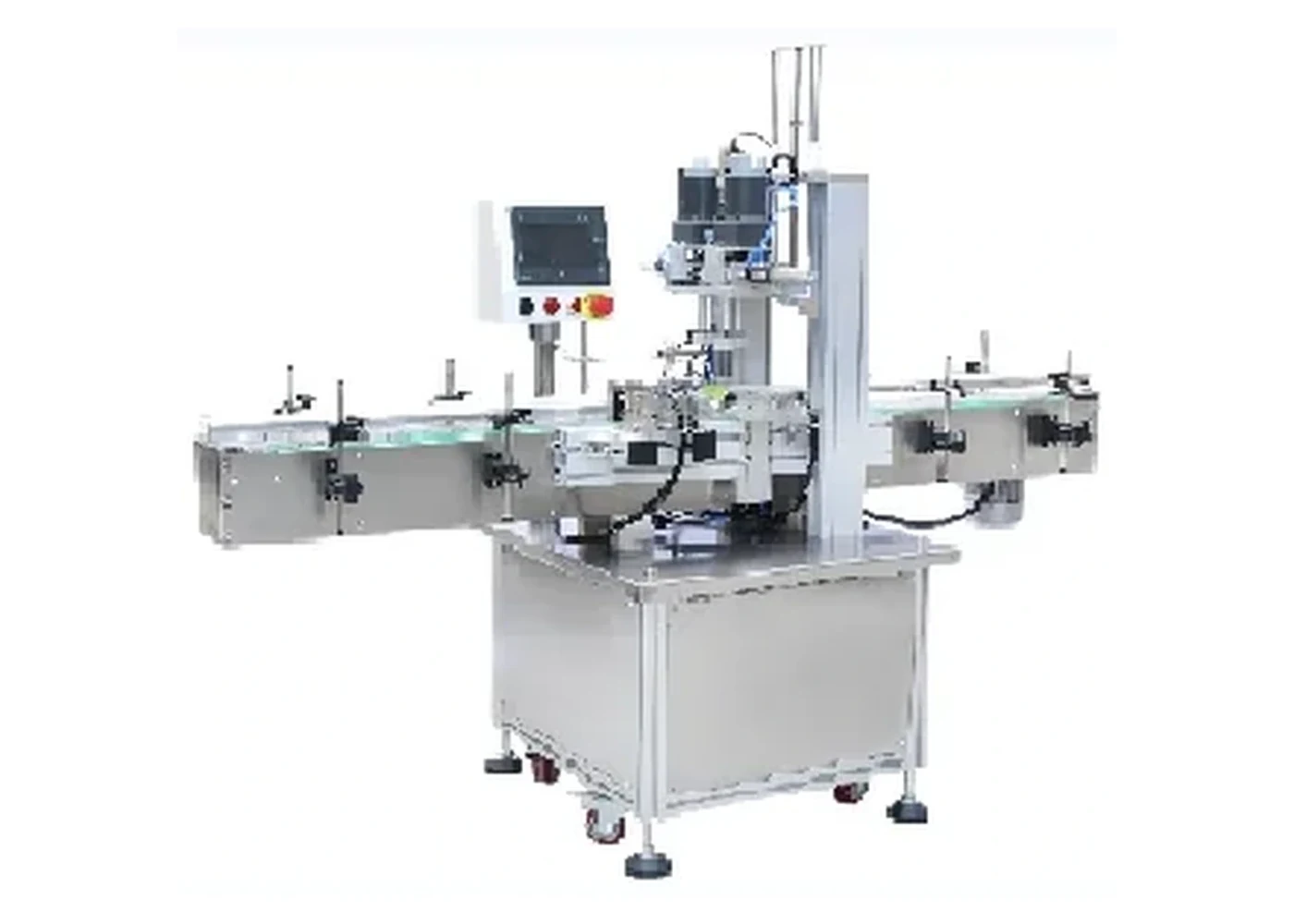
Equipment example shown; the final configuration is confirmed for your jars and lids.
Equipment examples
These photographs show capping and related packaging equipment. They do not identify a confirmed configuration for this machine; we confirm tooling and guarding for your jars and lids during project review.
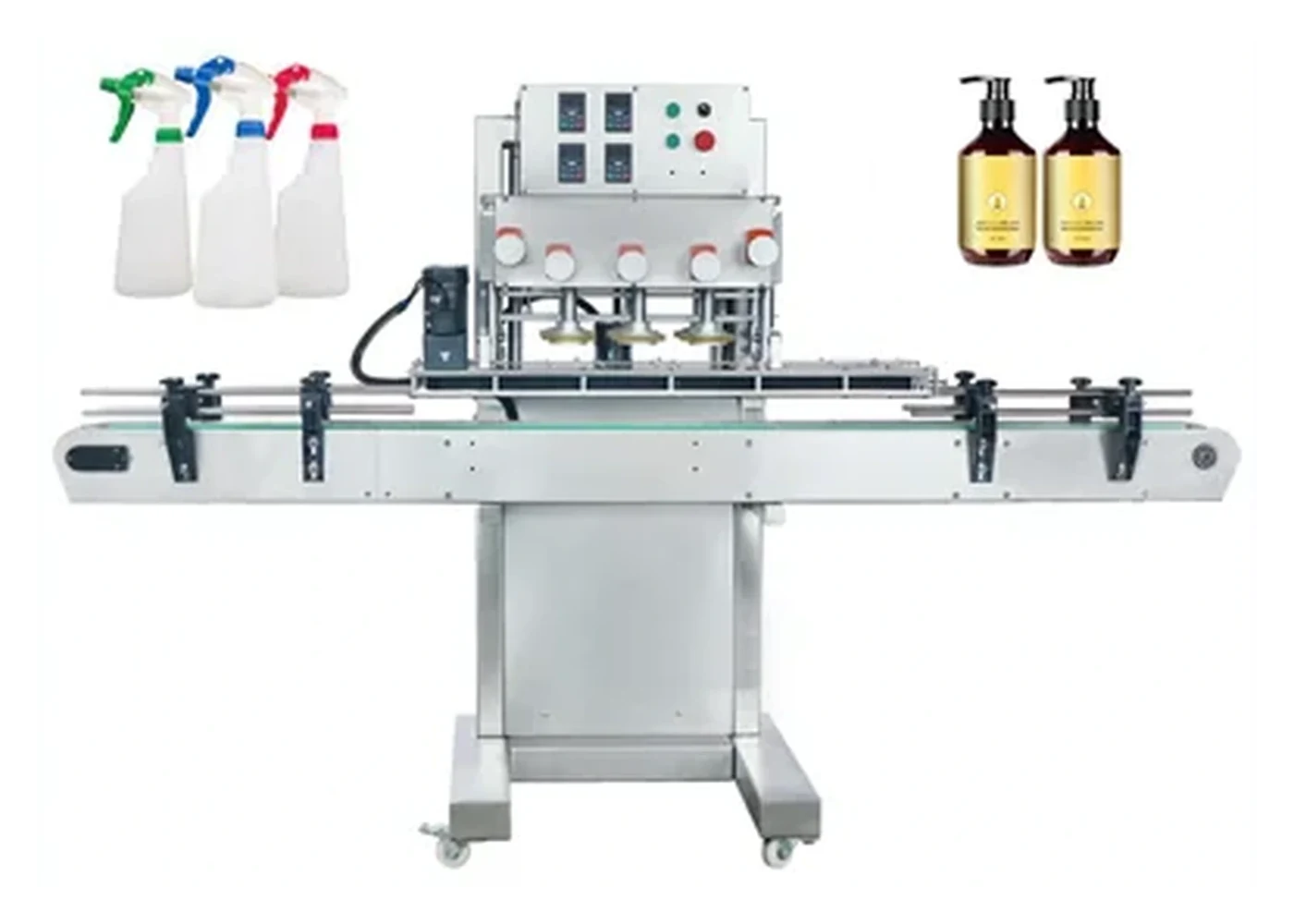
Ask for a demonstration using your own jars and lids before the machine is specified.
Use these figures to create your first shortlist.
Your confirmed specification will be based on real jars, lids, product conditions and an agreed trial.
| Indicative output | Approximately 20–40 containers per minute, format dependent |
|---|---|
| Indicative cap range | Ø18–70 mm |
| Indicative jar height | 60–270 mm |
| Closure route | Threaded screw lids with application-specific head and guides |
| Line format | Compact conveyorised capping cell |
Planning figures only. Final capability is confirmed against your production jars, lids, product conditions and required line layout.
Best suited to a defined jar-and-lid range.
SMEs, food producers, cosmetics manufacturers and contract packers seeking an automatic step-up from operator-assisted capping.
- Compact layout for restricted production areas
- Adjustable guides and capping settings
- Suitable for integration after a filler or inspection point
- Practical route for growing jar output and repeatable batches
What this route is designed to improve
Controlled closure application can reduce variation from hand tightening, make the cycle easier to train and provide a clearer basis for quality checks.
It does not remove the need to validate seal performance. Torque, lid height, vacuum, leak testing and visual finish should be defined for the actual packed product.
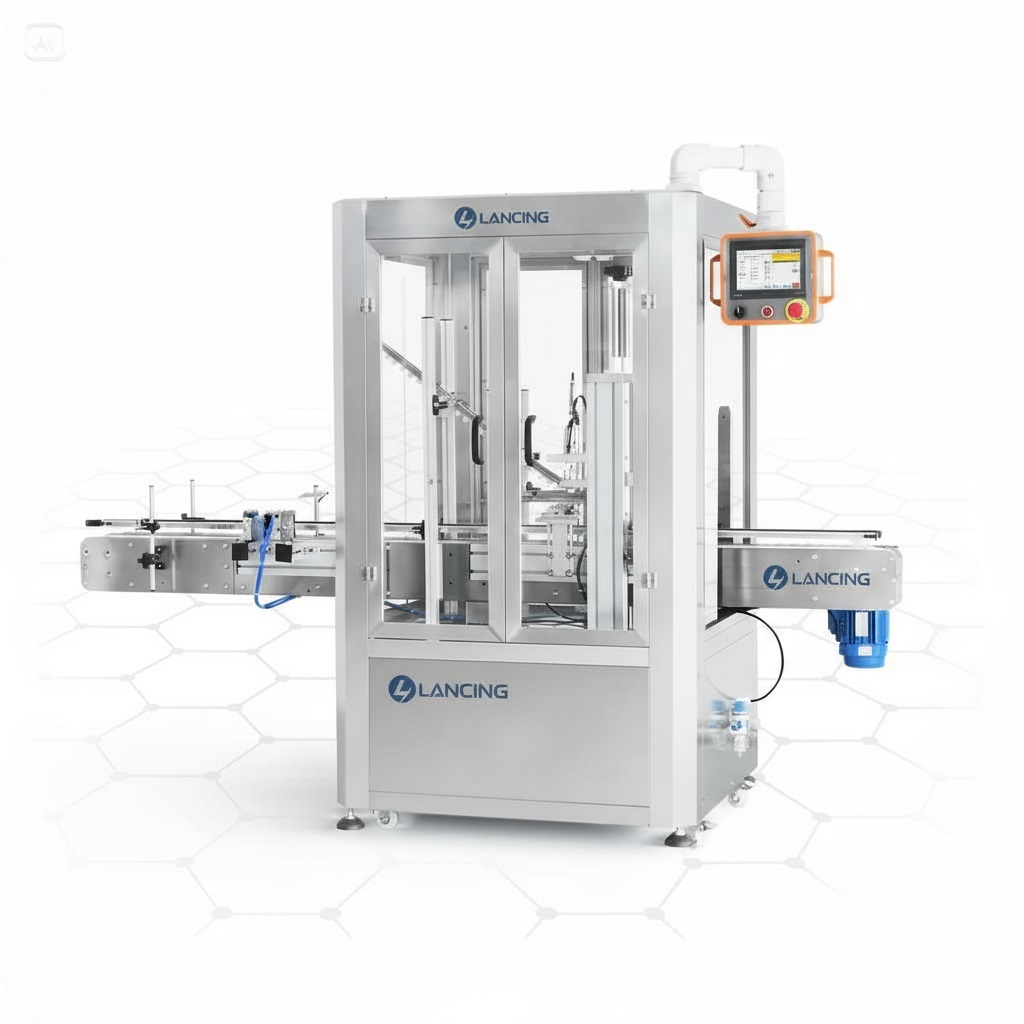
Send enough information for a realistic configuration.
Review cap presentation, whether lids are placed manually or fed automatically, jar stability on the conveyor, available line length and downstream label or packing equipment.
- Samples: production jars, lids and any liners or tamper features.
- Process: fill product, temperature, residue risk and finished-pack checks.
- Output: target jars per minute, batch pattern and operator availability.
- Integration: floor space, conveyor height, power, air and adjoining equipment.
Compact Automatic Jar Capper questions.
Can a compact jar capper be fully automatic?
The tightening stage can be automatic. Full automation also requires a dependable method for sorting, orienting and placing the lids.
Will it run wide jar lids?
Published ranges are only a starting point. Wide lids require a sample trial to confirm grip, torque, skirt engagement and container stability.
Can it be added to an existing conveyor?
Often yes, provided conveyor height, speed, controls, transfer gaps and available footprint are reviewed together.
Ready to check this machine against your pack? Send your jars, lids and target output, or view related Lancing machine information.
Check whether cap placement or jar transfer becomes the constraint.
A compact conveyorised capper can reduce floor space, but the production rate still depends on reliable jar spacing, closure presentation and operator access. Trial the intended upstream release and downstream queue rather than feeding isolated jars by hand.
- Confirm the smallest and largest approved jars remain stable on the compact conveyor.
- Define whether lids are manually placed or presented by an integrated feeder.
- Test stop and restart with jars and caps already inside the cell.
- Record guide, head, conveyor and sensor settings for each format.
- Measure the closure result before and after a representative changeover.